 Bahasa
Waterproofing Membrane vs. Coating: Understand the Differences and Applications
Waterproofing membrane and waterproofing coating are two systems commonly used to protect buildings from water penetration. Although they serve a similar purpose, each system has different characteristics, application methods, and suitable applications. As discussed in the article Building Waterproofing: Functions, Types, and How to Choose the Right Solution, understanding the difference between waterproofing membrane and coating can help you select the most suitable system for a specific area.
What Is a Waterproofing Membrane?
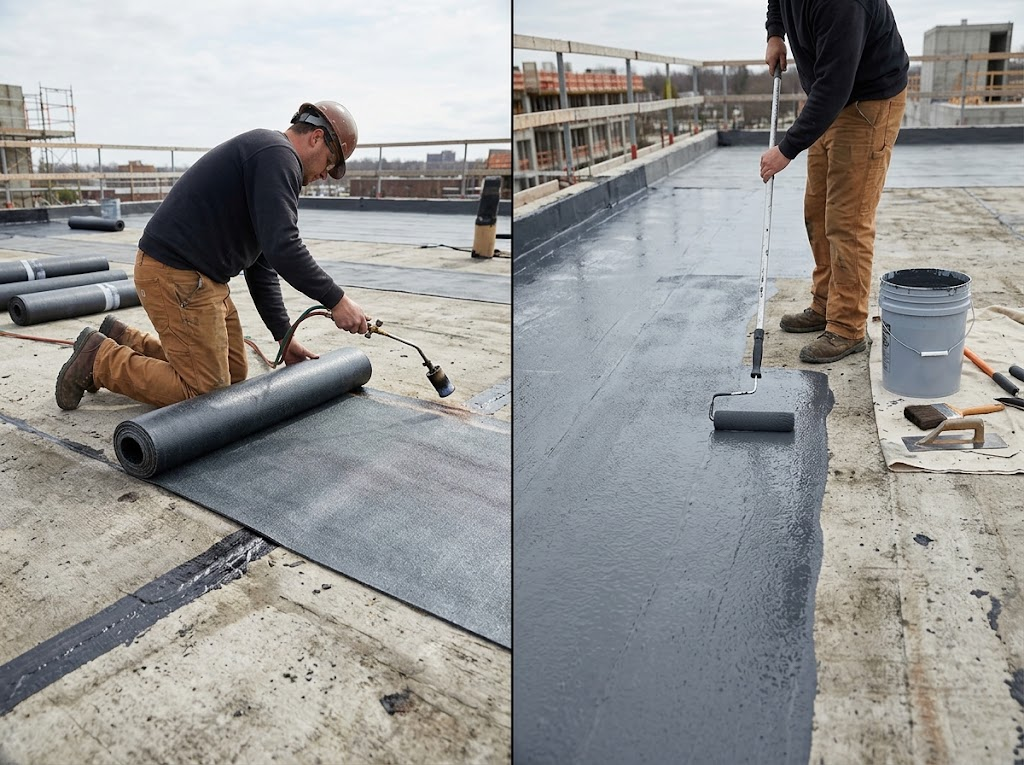
A waterproofing membrane is a sheet-based waterproofing material installed over concrete or other suitable surfaces. Depending on the product, the membrane can be applied by heating or torching it until it bonds to the surface, or by using a specialized adhesive.
Each membrane sheet is installed with an overlap system at the joints to create a continuous waterproofing layer and minimize gaps where water could potentially penetrate.
Waterproofing membrane systems are generally suitable for relatively large and flat areas, such as concrete roof slabs on multi-story buildings. The installation process can be carried out systematically, with the membrane sheets applied one section at a time according to the size and layout of the area.
What Is a Waterproofing Coating?
Unlike a membrane, a waterproofing coating is available in liquid or paste form and is applied directly to the surface using a brush, roller, or spray equipment.
Because it is applied as a liquid, waterproofing coating can follow the contours of uneven or irregular surfaces without requiring sheet joints. This makes coating systems suitable for areas with more complex shapes, such as corners, areas around pipes, and surfaces with multiple curves or details.
Waterproofing coating can also be easier to apply in areas where installing and joining sheet membranes would be difficult.
Key Differences Between Waterproofing Membrane and Coating
One of the main differences is thickness consistency. Waterproofing membranes generally have a more consistent thickness across the surface because they are manufactured as prefabricated sheets. In contrast, the final thickness of a waterproofing coating depends more heavily on the application technique and the number of coats applied on site. As a result, the consistency of the coating layer can vary depending on the skill and experience of the applicator.
Maintenance and repair are another consideration. Waterproofing coatings can generally be repaired locally by applying additional coating to the damaged area. For membrane systems, repairs are typically performed by patching the damaged section with a new piece of membrane.
In simple terms:
| Characteristic | Waterproofing Membrane | Waterproofing Coating |
|---|---|---|
| Form | Sheet | Liquid or paste |
| Application | Sheet installation with overlapping joints | Applied using brush, roller, or spray |
| Thickness | Generally more consistent | Depends on application technique |
| Surface suitability | Large and relatively flat surfaces | Complex, uneven, or detailed surfaces |
| Joints | Requires overlapping at sheet connections | No sheet joints |
| Local repairs | Usually requires membrane patching | Can generally be recoated |
How to Choose the Right Waterproofing System
Choosing between a waterproofing membrane and waterproofing coating should take into account the shape of the area, surface complexity, exposure to water, and the specific requirements of the building.
For large and relatively flat concrete roof slabs, a membrane system such as Casali Membrane Viscogum can be one option to consider, as also discussed in the article Concrete Roof Slab Waterproofing: A Technical Guide to Preventing Leaks.
For areas with complex shapes, numerous joints, corners, or difficult-to-reach details, a waterproofing coating may offer greater flexibility during application.
Ultimately, there is no single waterproofing system that is suitable for every building. By understanding the characteristics, application methods, and limitations of each system, you can choose between waterproofing membrane vs. coating based on the actual conditions and requirements of the building rather than simply following common practices in the field.