 Bahasa

Stone-Coated Metal Roofing vs Concrete, Clay & Asphalt Shingles: A Complete Comparison
Choosing a roofing material is not simply about color or façade aesthetics. The decision can directly affect the load on the roof structure, installation requirements, maintenance, and indoor comfort for many years.
Many homeowners and contractors choose heavier or more expensive roofing materials without first considering whether the roof structure has been designed to accommodate the required load. As a result, structural issues or premature roof problems may occur.
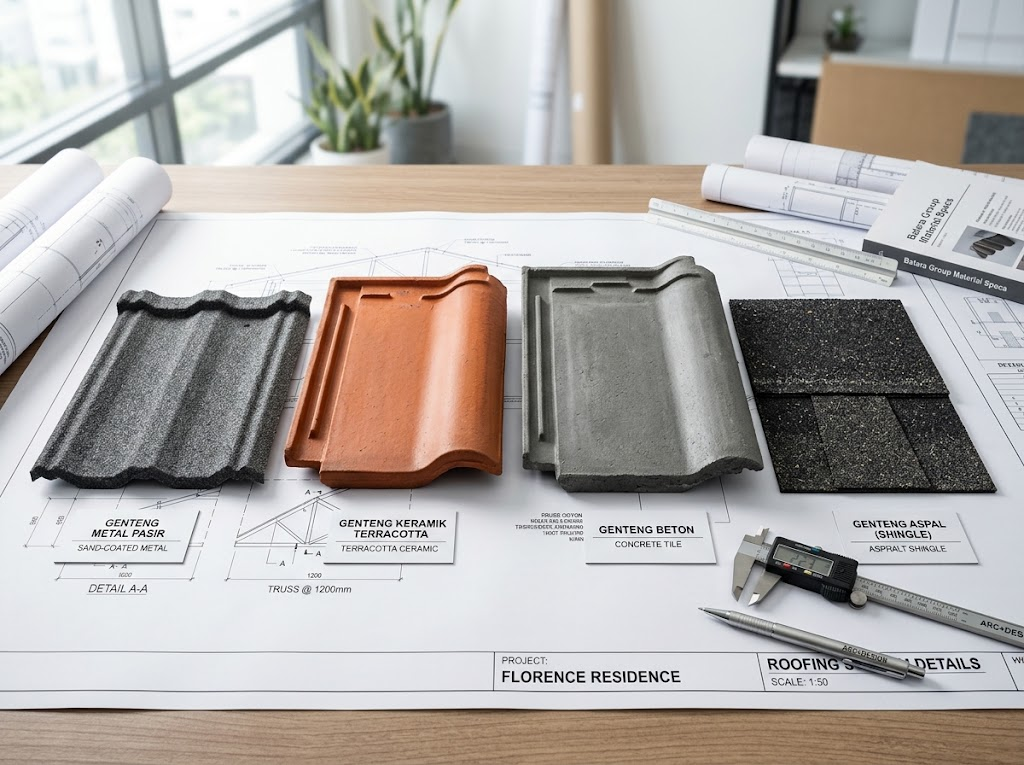
To help you make a more informed decision, let's compare four common roofing materials available in the Indonesian market: stone-coated metal, concrete, clay, and asphalt shingles.
Key Characteristics of Different Roofing Materials
Each roofing material is designed with different properties and applications in mind. Here are the basic characteristics of each type:
Concrete and Clay Roof Tiles
Both concrete and clay tiles are commonly associated with classic tropical architecture and a solid, durable appearance. However, these materials generally have a higher weight than lightweight roofing alternatives.
Because of their relatively high dead load, concrete and clay tiles should be installed on a roof structure designed to accommodate their weight and the applicable construction requirements.
Asphalt Shingles (Bitumen)
Asphalt shingles are flexible roofing sheets that can provide good acoustic performance, depending on the roofing system and supporting layers used.
One consideration is that certain asphalt shingle systems require a solid roof deck, such as plywood or an equivalent structural sheathing, as the substrate for installation. This additional layer can affect the overall installation cost and system weight.
Stone-Coated Metal Roofing
Stone-coated metal roofing combines the strength of galvanized steel with a protective layer of stone granules and polymer-based coatings.
Its relatively lightweight construction makes it a popular roofing option for buildings using lightweight steel roof frames. The stone-coated surface can also help reduce some of the noise associated with conventional metal roofing while providing additional aesthetic appeal.
Complete Roofing Comparison Table
To help with your project budgeting and Bill of Quantities (BoQ), here is a general comparison of these roofing materials:
| Technical Parameter | Stone-Coated Metal | Concrete / Clay | Asphalt (Bitumen) |
|---|---|---|---|
| Structural Load | Very Lightweight | Very Heavy | Lightweight–Medium |
| Tropical Weather Performance | Good | Good | Very Good |
| Rain Noise Reduction | Good (stone granule layer can help dampen sound) | Very Good | Very Good |
| Installation Speed | Fast (large-format sheets) | Slower (installed individually) | Moderate |
| Overall Cost Range | Economical | Medium–High | Premium / Higher |
Note: Actual performance, service life, installation requirements, and total project cost depend on the specific product, roof design, substrate, installation method, site conditions, and manufacturer specifications.
Choosing the Right Roofing Material for Your Project
The most expensive roofing material is not necessarily the most suitable option for every project. Consider the following key site and project conditions before making your selection.
For Lightweight Steel Roof Structures
Stone-coated metal roofing has a relatively low weight, making it one of the roofing options commonly considered for buildings with lightweight steel roof structures.
However, the selected roofing material should still be matched to the structural capacity, roof-frame design, installation system, and product specifications. Proper structural calculations should be carried out to ensure the roofing system is suitable for the building.
For Areas with High Rainfall
The stone granules on the surface of stone-coated metal roofing can help dampen the sound generated by falling rain. This can provide better acoustic comfort compared with conventional bare metal roofing, depending on the overall roof assembly and installation.
For Budget Efficiency
In terms of installed roofing cost, large-format metal roofing sheets can potentially reduce installation time and labor requirements because fewer individual pieces need to be installed compared with conventional concrete or clay tiles.
However, the total cost should also consider supporting materials, accessories, fasteners, labor, roof geometry, and other installation requirements.
Plan Your Roofing Protection Today
Don't choose a roofing material based on appearance or price alone. Consider the structural requirements, installation system, environmental conditions, maintenance needs, and overall project budget.
Explore the range of quality Roof Tiles from Batara Group, including the premium Flatz Roof collection.
For more technical insights, read our guide: Still Confused About Choosing a Roof? Discover the Benefits of Stone-Coated Metal Roofing for Homes in Indonesia.
You can also review 5 Things to Consider Before Choosing Roof Tiles for Your Home before making your purchase decision.
Contact our technical team to discuss your roofing requirements, determine the appropriate specifications for your project, and request a quotation.