 Bahasa

How to Choose Waterproofing for Homes in Flood-Prone & Humid Areas
Building a home in a city with extreme rainfall and frequent flooding, such as Jakarta, or in a coastal area with high humidity, such as Semarang and Surabaya, presents significant challenges for building protection. Standard wall paint alone is not enough to provide reliable protection against prolonged water exposure.
Without a waterproofing system designed to address the site's specific conditions, concrete structures may be exposed to moisture-related deterioration, reinforcement steel may be susceptible to corrosion, and persistent dampness can contribute to mold growth on walls.
Every location presents different water-related challenges, so the waterproofing strategy should not be treated as a one-size-fits-all solution. Let's explore how to select the right waterproofing system to help protect your property from different types of water exposure.
Why Do Geographic Conditions Require Different Strategies?
Water can affect buildings in different ways in flood-prone areas and locations with consistently high humidity:
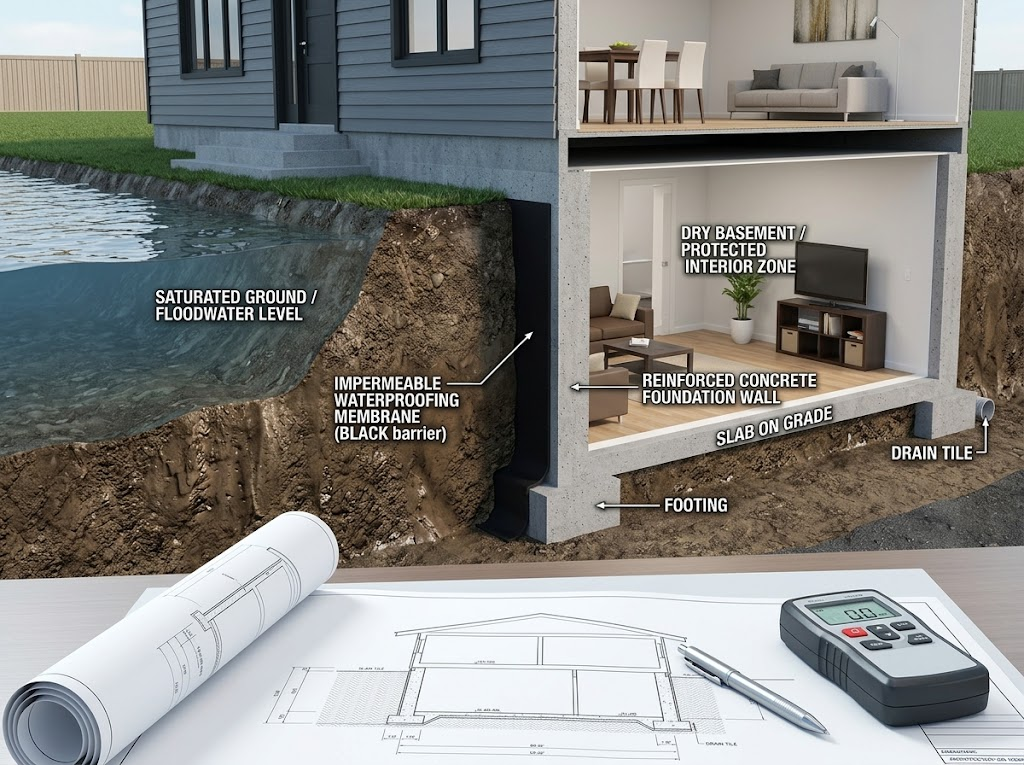
- Flood-Prone Areas: Buildings may be exposed to hydrostatic pressure, which occurs when standing or groundwater exerts pressure against below-grade walls, foundations, and other building elements. Prolonged water exposure can increase the risk of water penetration through cracks, joints, and porous concrete.
- High-Humidity Areas: Buildings may experience capillary moisture movement, in which moisture from the ground can migrate through porous building materials. This can contribute to damp walls, peeling finishes, efflorescence, and mold growth if moisture is not properly controlled.
Therefore, a home waterproofing system designed only to protect against occasional rain splash may not be sufficient for areas exposed to prolonged flooding or groundwater pressure.
Critical Areas That Should Be Prioritized
Before purchasing waterproofing materials, identify which areas will serve as the first line of defense against extreme weather and prolonged moisture exposure.
Foundations and Basements
Below-grade areas are particularly vulnerable because they can come into direct contact with saturated soil and groundwater. Water infiltration in these areas can affect interior spaces and, if left unaddressed, contribute to deterioration of building components.
Lower Walls (Exterior & Interior)
In flood-prone areas, floodwater may reach significant heights above the ground floor. Lower wall sections should therefore receive appropriate protection based on the expected water exposure and the condition of the existing substrate.
Waterproofing should be combined with suitable surface preparation and, where necessary, repairs to cracks, joints, and other potential water-entry points.
Concrete Roof Slabs and Flat Roofs
During the rainy season, flat roofs and concrete roof slabs can be exposed to substantial amounts of rainwater. If the waterproofing system is improperly selected or installed, water may penetrate cracks and joints and eventually cause dampness or leakage in the ceiling below.
Choosing Waterproofing Materials Based on Site Conditions
Selecting the wrong waterproofing material can reduce the overall performance of the building protection system. The appropriate solution should be selected based on the type and severity of water exposure, substrate condition, application area, and manufacturer specifications.
For Flood-Prone Areas (High Water Pressure)
- Torch-On or Self-Adhesive Waterproofing Membrane: Membrane systems can be considered for foundations, basements, and concrete roof slabs where a continuous waterproofing layer is required. Depending on the product specification and installation system, membrane waterproofing can provide protection against prolonged water exposure and hydrostatic pressure.
- Crystalline Waterproofing: For concrete walls and other suitable concrete structures, crystalline waterproofing materials can react within the concrete matrix to form crystalline deposits that help reduce water penetration through capillaries and fine cracks. Application should follow the manufacturer's specifications and substrate requirements.
For Humid Areas (Moisture Migration)
- Polyurethane (PU) Coating: PU waterproofing can be suitable for exposed roofs and exterior areas where flexibility and resistance to outdoor exposure are required. Product suitability for direct UV exposure should be verified with the manufacturer's technical specifications.
- Flexible Cementitious Waterproofing: Flexible cement-based waterproofing can be used in wet interior areas, such as bathrooms, before tile installation. It can help create a protective waterproofing layer and reduce moisture penetration into adjacent building elements.
Combine Waterproofing with an Effective Drainage System
Even a high-performance waterproofing system may not be sufficient if it is continuously subjected to standing water without proper drainage.
Waterproofing should therefore be integrated with an effective drainage system. Make sure floor and roof slopes are properly designed and drainage channels, gutters, and outlets are kept clear of blockages so that water can be discharged efficiently and directed away from the building.
Proper drainage reduces the amount and duration of water exposure that the waterproofing system needs to withstand.
Consult an Expert About Your Home Protection System
Don't let extreme weather compromise the comfort and protection of your home. Plan your residential Waterproofing system using materials selected according to your project's specific requirements. Batara Group provides waterproofing solutions from Casali and Wisproof for various building applications.
For more detailed information about waterproofing in challenging areas, read our article: Basement Waterproofing Challenges and How to Address Them.
You can also prepare your bathroom and wet-area protection system by reading Things to Consider Before Applying Bathroom Waterproofing.
Contact the Batara Group technical team to discuss the appropriate waterproofing solution based on your home's geographic conditions, substrate, and water-exposure challenges.