 Bahasa
Turbine Ventilator vs. Exhaust Fan: Which Is Better for Your Building?
A hot, stuffy room is often a sign that your building's ventilation system isn't performing efficiently. To improve indoor air circulation, many property owners install additional ventilation systems such as roof turbine ventilators or exhaust fans.
At first glance, both devices appear to serve the same purpose—removing warm air from inside a building. Because of this, many people assume they are interchangeable.
In reality, turbine ventilators and exhaust fans operate differently, are installed in different locations, and are designed to solve different ventilation challenges.
Understanding these differences will help you choose the most effective solution for your building.
What's the Difference Between a Turbine Ventilator and an Exhaust Fan?
Although both systems improve air circulation, they operate using completely different mechanisms.
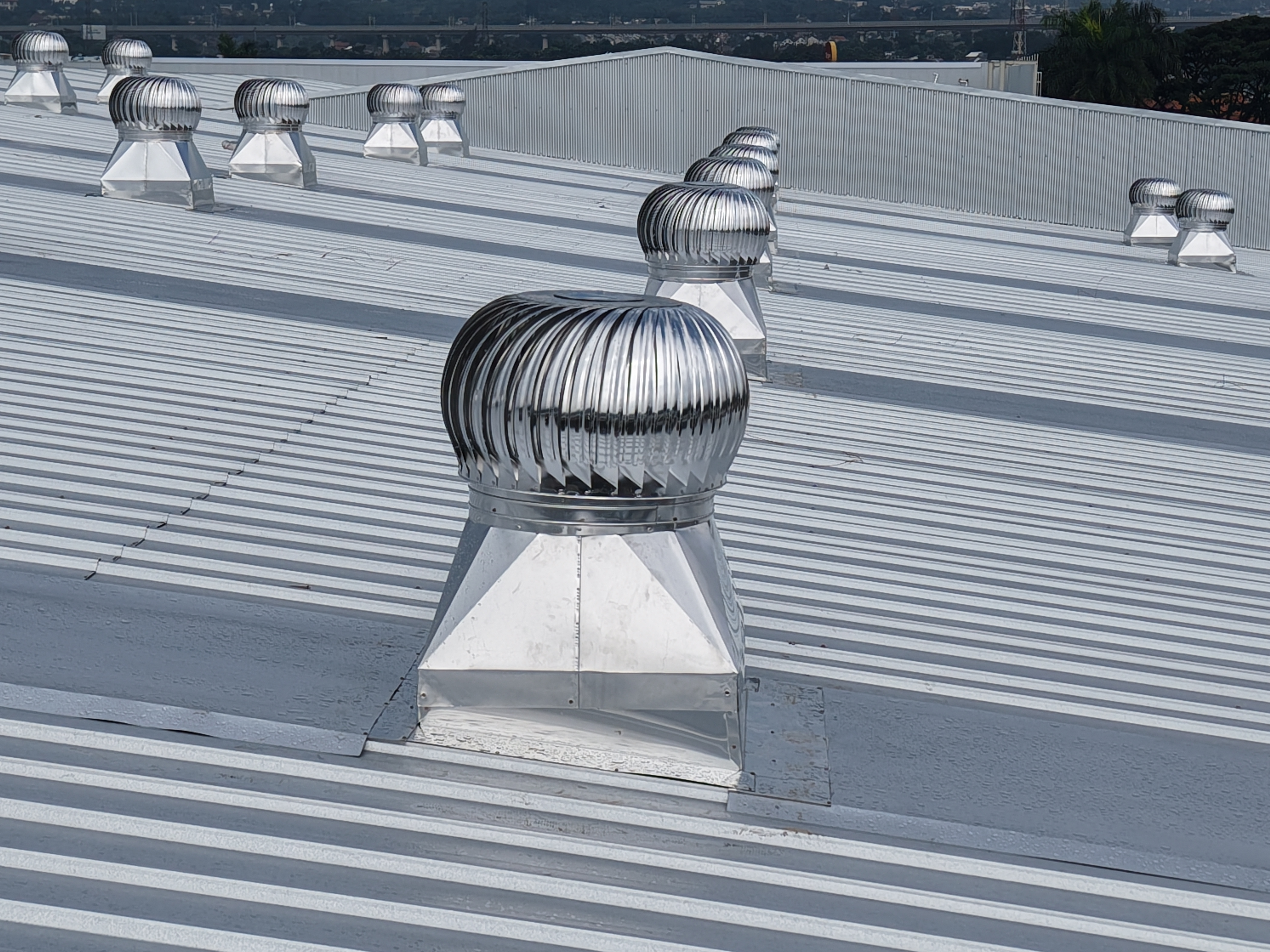
A turbine ventilator uses natural wind and air pressure differences to rotate its turbine. As the turbine spins, it draws accumulated hot air from beneath the roof and exhausts it outside.
Since there is no electric motor, a turbine ventilator operates without electricity.
An exhaust fan, on the other hand, uses an electric motor to actively pull air from a room and discharge it outdoors through a wall or ceiling opening.
Unlike a turbine ventilator, an exhaust fan continues operating regardless of outdoor wind conditions—as long as electrical power is available.
Because they function differently, each system is designed for different ventilation requirements.
Turbine Ventilator vs. Exhaust Fan: Key Differences
How They Work
Turbine Ventilator
A roof turbine ventilator is powered by natural wind.
As the turbine rotates, hot air trapped beneath the roof rises naturally and is expelled from the building, creating continuous passive ventilation.
Exhaust Fan
An exhaust fan actively removes indoor air using an electric motor.
Because airflow is mechanically generated, ventilation performance remains consistent whenever the fan is switched on.
Energy Consumption
One of the biggest advantages of a turbine ventilator is that it does not consume electricity during operation.
This makes it a cost-effective long-term solution for improving roof ventilation while reducing operating expenses.
Exhaust fans, however, require electricity every time they operate. The longer they run, the higher the overall energy consumption.
Installation Location
The installation location also differs significantly.
Turbine Ventilator
Roof turbine ventilators are installed on the roof to remove hot air that naturally accumulates beneath the roof structure.
They are especially effective in buildings with large roof spaces.
Exhaust Fan
Exhaust fans are typically installed in:
- Walls
- Ceilings
- Kitchens
- Bathrooms
- Production rooms
- Utility areas
They provide localized ventilation by extracting air directly from a specific room.
Because of these different installation locations, turbine ventilators and exhaust fans often complement each other rather than replace one another.
Maintenance Requirements
Turbine Ventilator
Since turbine ventilators contain no electric motor, maintenance is relatively simple.
Routine inspections generally involve:
- Checking smooth turbine rotation
- Inspecting bearings
- Ensuring roof flashing and seals remain watertight
Exhaust Fan
Exhaust fans require more regular maintenance because they include electrical components.
Dust accumulation on:
- Fan blades
- Electric motors
- Vent openings
should be cleaned periodically to maintain optimal airflow and extend equipment life.
Which Is Better for Residential Homes?
If your home becomes hot because heat accumulates beneath the roof, a roof turbine ventilator can be an excellent solution.
By naturally removing trapped hot air, it helps improve indoor comfort without increasing electricity costs.
However, if the issue is localized—such as cooking smoke in the kitchen or excess humidity in a bathroom—an exhaust fan is generally the better option because it removes air directly from that specific space.
Many homes successfully use both systems together:
- Roof turbine ventilators reduce heat buildup beneath the roof.
- Exhaust fans improve ventilation in individual rooms.
What About Warehouses, Factories, and Commercial Buildings?
Large buildings such as warehouses, factories, and commercial facilities often experience significant heat accumulation beneath expansive roof structures.
In these environments, roof turbine ventilators are widely used because they continuously remove hot air without increasing energy consumption.
Exhaust fans are typically installed as supplementary ventilation in areas requiring targeted air extraction, including:
- Manufacturing areas
- Commercial kitchens
- Equipment rooms
- Smoke-producing processes
- Steam-generating workspaces
In commercial and industrial buildings, both systems are frequently used together because they serve different ventilation purposes.
Do Turbine Ventilators Work During Rain?
One of the most common questions is whether rainwater can enter through a roof turbine ventilator.
Many building owners worry that the rotating turbine could allow water into the building.
With properly engineered products, this is generally not a concern.
The turbine blades are designed to deflect rainwater while allowing continuous airflow.
However, installation quality remains critical.
Proper flashing, sealing, and roof detailing are essential to ensure both effective ventilation and reliable waterproofing.
How to Choose the Right Roof Turbine Ventilator
If a turbine ventilator is the right solution for your building, consider these important factors before making your selection.
1. Choose the Correct Size
The size of the turbine affects its ventilation capacity.
Selecting the appropriate size helps remove hot air more efficiently based on the roof area and building volume.
2. Select the Right Material
Material selection influences durability and corrosion resistance.
Buildings located in humid or coastal environments should use turbine ventilators manufactured from corrosion-resistant materials.
3. Check Bearing Quality
Bearings play a major role in smooth turbine operation.
High-quality bearings provide:
- Stable rotation
- Lower maintenance requirements
- Longer service life
4. Ensure Professional Installation
Even the highest-quality turbine ventilator will not perform properly if installed incorrectly.
Professional installation helps maximize ventilation performance while minimizing the risk of roof leaks.
Ozvent Roof Turbine Ventilators for Residential, Commercial, and Industrial Buildings
The effectiveness of a turbine ventilator depends not only on its operating principle but also on product quality.
Ozvent, offered by Batara Group, is designed to improve natural roof ventilation without consuming electricity.
Available in multiple sizes, Ozvent is suitable for:
- Residential homes
- Retail buildings
- Warehouses
- Factories
- Industrial facilities
With precision engineering and durable materials, Ozvent helps reduce heat buildup beneath the roof while improving natural airflow throughout the building.
Frequently Asked Questions (FAQ)
Is a turbine ventilator better than an exhaust fan?
Neither is universally better. A turbine ventilator is ideal for naturally removing hot air trapped beneath the roof without electricity, while an exhaust fan is better suited for extracting air from individual rooms using powered ventilation.
Does my house need a turbine ventilator?
If your home frequently becomes hot because heat accumulates beneath the roof, a turbine ventilator can significantly improve natural ventilation and indoor comfort.
Does a turbine ventilator use electricity?
No. Turbine ventilators operate using natural wind and pressure differences, requiring no electrical power during operation.
Is the Ozvent turbine ventilator safe during rain?
Yes. Ozvent features specially designed turbine blades that help prevent rainwater from entering the building while maintaining effective ventilation.
Can a turbine ventilator and an exhaust fan be used together?
Yes. Many buildings use both systems because they serve different purposes. A turbine ventilator removes accumulated roof heat, while exhaust fans provide localized ventilation for individual rooms.
Improve Natural Ventilation with the Right Solution
Although turbine ventilators and exhaust fans both improve airflow, they are designed to solve different ventilation challenges.
Choosing the right system should depend on the source of the ventilation problem, the building's design, and the intended application—not simply the type of product.
If your primary goal is to reduce heat buildup beneath the roof without increasing electricity consumption, a roof turbine ventilator is an excellent solution.
Ozvent by Batara Group offers reliable natural roof ventilation for residential, commercial, and industrial buildings, helping improve indoor comfort while reducing long-term operating costs.