 Bahasa
Roof Aluminium Foil Insulation: Benefits, How It Works, and When to Use It
In tropical climates like Indonesia, heat entering through the roof is one of the primary causes of elevated indoor temperatures. Since the roof is exposed to direct sunlight for most of the day, it absorbs a significant amount of solar heat, which is then transferred into the building.
As indoor temperatures rise, occupant comfort decreases and air conditioning systems often need to work harder, leading to higher energy consumption. To minimize heat transfer, many buildings incorporate insulation systems beneath the roof.
One of the most widely used solutions is roof aluminium foil insulation. This reflective insulation material is commonly installed in residential homes, warehouses, commercial buildings, and industrial facilities to improve thermal performance.
So, what exactly does aluminium foil insulation do, and when is it the right choice?
What Is Roof Aluminium Foil Insulation?
Roof aluminium foil is a reflective insulation material designed to reduce the amount of solar heat entering a building through the roof. Instead of generating cool air, it reflects a large portion of radiant heat away from the building, helping maintain a more comfortable indoor environment.
To improve performance and ease of installation, aluminium foil is often combined with additional insulation materials, including:
- Bubble insulation
- Polyethylene foam
- Glasswool
- Other thermal insulation materials
Because of its highly reflective surface, aluminium foil has become one of the most popular components in modern roofing insulation systems, particularly in regions with intense sunlight.
Why Is Aluminium Foil Commonly Used for Roof Insulation?
The roof receives the highest level of solar radiation compared to other parts of a building. Without adequate insulation, this heat is transferred into interior spaces, reducing thermal comfort and increasing cooling costs.
Heat transfer through a roof generally occurs through three mechanisms:
- Radiation
- Conduction
- Convection
Among these, solar radiation is typically the largest contributor to heat gain in buildings located in hot climates. Aluminium foil acts as a reflective barrier, reducing radiant heat before it penetrates the roof structure.
For this reason, aluminium foil insulation is widely used in:
- Residential homes
- Warehouses
- Factories
- Commercial buildings
- Storage facilities
How Does Aluminium Foil Reduce Heat?
A common misconception is that aluminium foil makes a room cold. In reality, its primary function is to reduce heat gain, not to produce cooling.
When sunlight strikes a roof, part of the solar energy is absorbed by the roofing material while the remainder passes through into the building. Aluminium foil works by reflecting much of this radiant heat away before it can be transferred indoors.
As a result, less heat enters the building, making indoor spaces more comfortable and reducing the workload on cooling systems.
However, it's important to understand that overall insulation performance also depends on several other factors, including:
- Roof material
- Building ventilation
- Additional insulation layers
- Installation quality
Aluminium foil performs best as part of a complete roof insulation system rather than as a standalone solution.
Common Types of Roof Aluminium Foil Insulation
Although often referred to simply as "aluminium foil," roof insulation products are available in several different configurations. Choosing the right type depends on the building's requirements, climate, and desired thermal performance.
Single-Sided Aluminium Foil
This type features a reflective aluminium layer on one side of the material. It is commonly selected for basic insulation applications where cost efficiency is a priority.
Advantages
- Cost-effective
- Easy to install
- Suitable for standard insulation needs
Double-Sided Aluminium Foil
Double-sided aluminium foil includes reflective surfaces on both sides, allowing it to reflect radiant heat from multiple directions.
Advantages
- Higher thermal reflectivity
- Better performance in high-heat environments
- Suitable for more demanding insulation applications
Bubble Aluminium Foil Insulation
This product combines aluminium foil with an internal layer of air-filled bubbles (bubble insulation). The trapped air provides additional thermal resistance while maintaining a lightweight structure.
Advantages
- Lightweight construction
- Easy installation
- Commonly used in commercial and industrial buildings
- Enhanced thermal insulation performance
Benefits of Roof Aluminium Foil Insulation
Helps Reduce Heat Transfer
The reflective surface reduces radiant heat entering through the roof, helping maintain a more comfortable indoor temperature.
Lightweight Material
Aluminium foil insulation adds minimal weight to the roof structure, making it suitable for various roofing systems.
Easy Installation
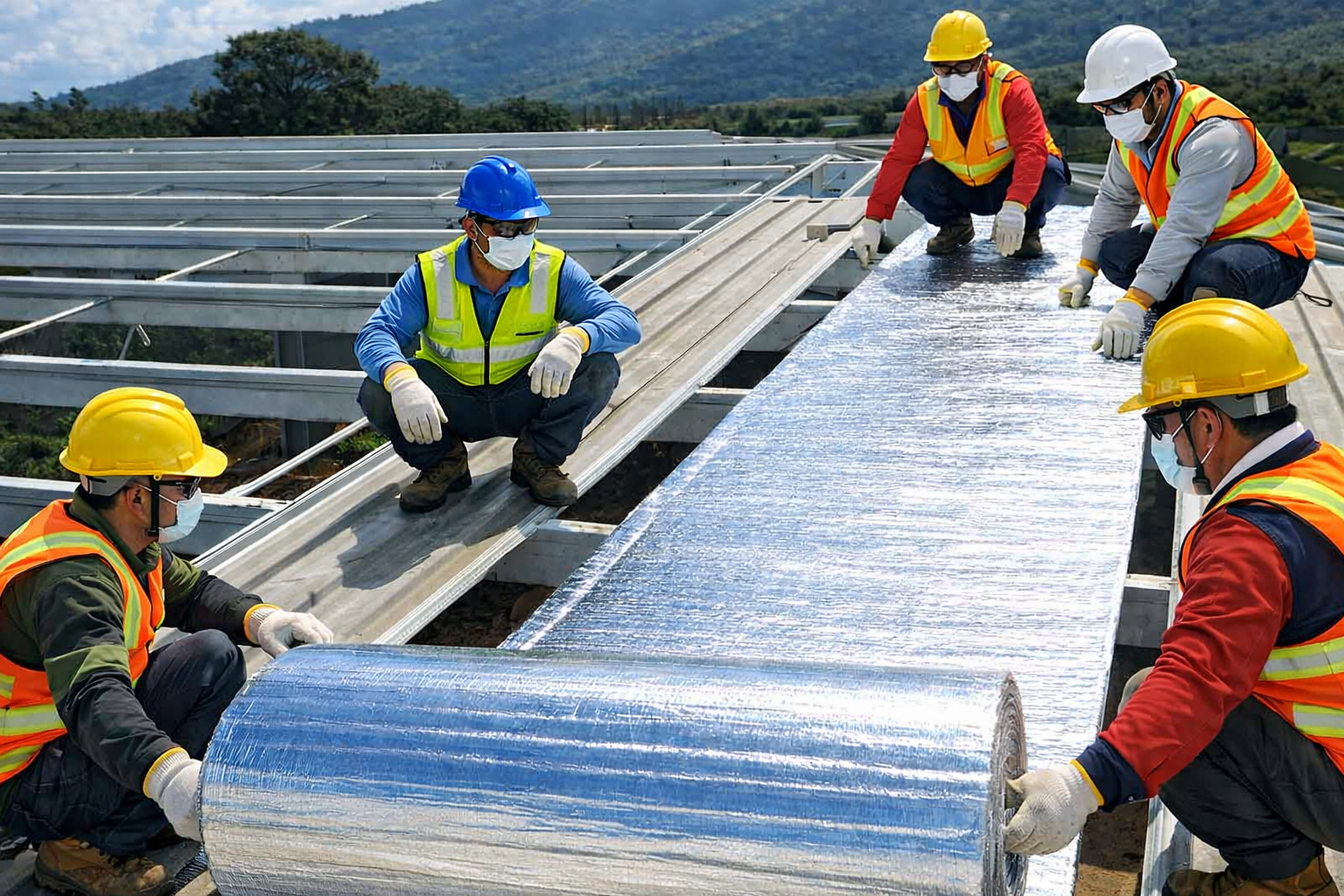
Available in sheet or roll form, aluminium foil is relatively simple to install on many different roof types.
Suitable for Various Buildings
Roof aluminium foil insulation can be used in:
- Residential homes
- Retail buildings
- Warehouses
- Manufacturing facilities
- Commercial properties
Factors to Consider When Choosing Roof Aluminium Foil
Every building has unique insulation requirements. Before selecting an aluminium foil product, consider the following factors.
Building Type
Residential homes have different insulation needs than factories or warehouses. Larger roof areas and buildings exposed to intense sunlight generally require higher-performance insulation materials.
Roofing System
The type of roof construction influences both product selection and installation methods. Always ensure the insulation is compatible with your roofing system for optimal performance.
Material Quality
Price should not be the only consideration. The quality of the aluminium layer is equally important.
One key specification is the aluminium thickness (measured in microns). Thicker aluminium layers generally provide:
- Better corrosion resistance
- Improved durability
- Longer service life
Frequently Asked Questions (FAQ)
Does roof aluminium foil really reduce heat?
Yes. Aluminium foil reflects a significant portion of radiant heat from sunlight, reducing heat transfer through the roof and helping maintain a cooler indoor environment.
Is aluminium foil the same as roof insulation?
No. Aluminium foil is one component of a roof insulation system. Its primary function is to reflect radiant heat, while a complete insulation system may include additional materials to reduce conductive and convective heat transfer.
Where is aluminium foil installed?
Aluminium foil is typically installed beneath the roof covering as part of the roof insulation system. This placement helps reflect solar heat before it reaches the interior of the building.
Is aluminium foil suitable for residential homes?
Yes. Aluminium foil insulation is widely used in houses, shop buildings, warehouses, factories, and commercial properties to improve thermal comfort.
Can aluminium foil be combined with glasswool?
Yes. Aluminium foil is frequently paired with glasswool to create a more effective insulation system. While the aluminium foil reflects radiant heat, the glasswool slows conductive heat transfer, improving overall thermal performance.
Improve Building Comfort with the Right Roof Insulation
Roof aluminium foil insulation is an effective solution for reducing solar heat gain, particularly in tropical climates with high levels of sunlight. However, its performance depends on selecting the right product, proper installation, and integrating it into a well-designed insulation system.
Before choosing insulation materials, it is important to evaluate your building's design, environmental conditions, and thermal performance requirements. With the appropriate solution, aluminium foil can play a key role in creating a more energy-efficient and comfortable building for years to come.
Need expert guidance? Contact Batara Group today to discuss the best roof aluminium foil insulation and thermal insulation solutions for your residential, commercial, or industrial project.