 Bahasa
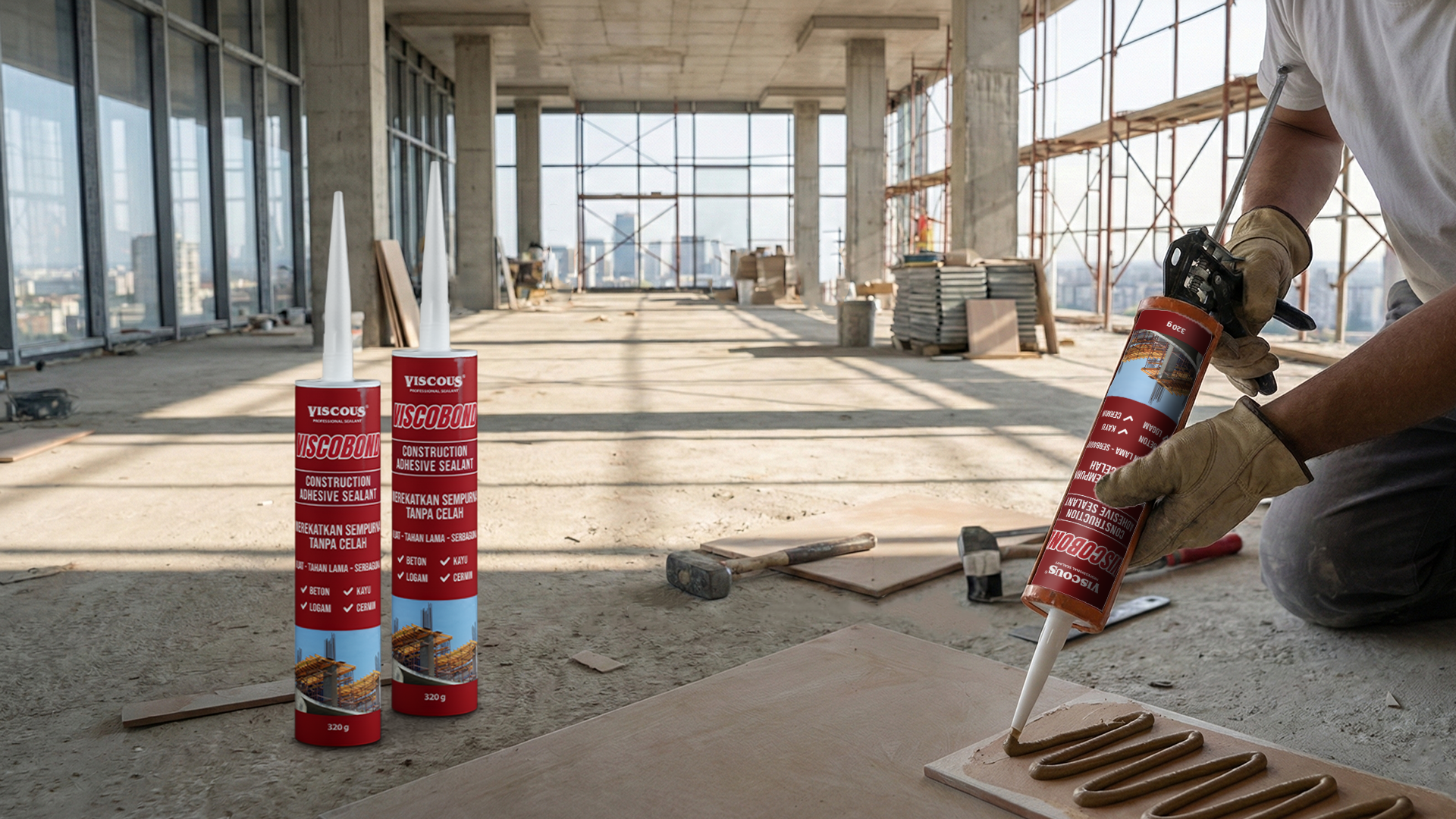
Construction Adhesive for Various Building Materials: Functions, Applications, and How to Choose the Right One
Not every installation project requires nails or screws. In many applications, especially finishing and renovation work, construction adhesive offers a more practical solution by providing strong bonds while delivering a cleaner, more professional appearance.
From installing decorative panels and natural stone to bonding wood to concrete, construction adhesives are now widely used across various construction projects. However, achieving optimal results requires selecting the right product based on the materials involved and the installation environment.
What Is Construction Adhesive?
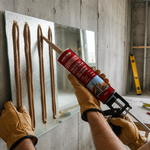
Construction adhesive is a high-strength bonding agent designed to join a wide range of building materials. Unlike general-purpose household adhesives, construction adhesives are specifically formulated for construction, renovation, and finishing applications that require durable, long-lasting bonds.
When applied, the adhesive fills gaps between surfaces and hardens through a curing process, creating a strong and reliable bond. Some formulations also retain a degree of flexibility after curing, allowing them to accommodate minor material movement caused by temperature changes or humidity fluctuations.
Because a single product can bond multiple types of materials, construction adhesives are commonly used for installing panels, wall trims, natural stone, and for attaching wood, metal, or PVC to concrete surfaces.
What Materials Can Construction Adhesive Bond?
One of the main advantages of construction adhesive is its ability to bond various building materials using a single product. This makes installation work more efficient, particularly in projects that involve multiple material types.
In general, construction adhesive can be used to bond:
- Cement-based materials, such as concrete, brick, GRC boards, and fiber cement.
- Wood products, including solid wood, MDF, and HPL panels.
- Metals, such as aluminum, steel, and stainless steel.
- Finishing materials, including ceramic tiles and natural stone.
- Plastic-based materials, such as PVC and UPVC.
Although construction adhesives are highly versatile, it is important to ensure that the selected product is suitable for the specific materials and application requirements to achieve the best bonding performance.
When Should You Use Construction Adhesive?
Construction adhesive is ideal when a strong bond and a clean finished appearance are required. In certain applications, it can reduce or eliminate the need for nails and screws, making installation more efficient while minimizing visible holes and surface damage.
As a result, construction adhesives are widely used for interior projects, finishing applications, and various construction and renovation tasks. Common examples include installing decorative panels, gypsum boards, GRC panels, natural stone, and bonding wood or metal to concrete surfaces.
Why Is Construction Adhesive Widely Used?
There are several reasons why construction adhesives have become increasingly popular in construction projects. In addition to simplifying installation, a single product can often be used across multiple materials, improving efficiency and reducing material complexity.
Key benefits include:
- Strong bonding performance across a wide range of building materials.
- Compatibility with materials such as concrete, wood, metal, ceramic, and natural stone.
- Cleaner installations by reducing the need for nails or screws in certain applications.
- Suitable for both interior and exterior use, depending on product specifications.
- Easy to apply, as most products are available in ready-to-use packaging.
Factors to Consider When Choosing Construction Adhesive
1. Material Type
Make sure the adhesive is compatible with the materials being bonded. Some products are formulated for specific substrates, while others are designed for multi-material applications.
2. Installation Environment
The installation area plays an important role in determining the right adhesive. For outdoor applications, choose a product that offers resistance to water, moisture, and changing weather conditions. Interior applications may require different performance characteristics.
3. Surface Condition
Bonding performance depends not only on the quality of the adhesive but also on the condition of the surfaces being bonded. Clean, dry surfaces free from dust, dirt, and grease will help ensure maximum adhesion.
4. Ease of Application
Different products have different application characteristics. Choose a construction adhesive that matches your installation method and project requirements to improve efficiency and ease of use.
5. Packaging and Application Method
Construction adhesives are available in various packaging formats, including cartridges and tubes. Select the packaging option that best suits your project to make application easier and achieve cleaner results.
Viscobond: Construction Adhesive for Various Building Materials
One construction adhesive option suitable for a wide range of materials is Viscobond from Batara Group.
Viscobond is designed to bond various construction materials, including concrete, brick, wood, metal, ceramic, and PVC. With its high bonding strength and resistance to water and moisture, it can be used for a variety of indoor and outdoor applications.
Available in both cartridge and tube packaging, Viscobond provides a practical solution for construction, renovation, and finishing projects.
Frequently Asked Questions (FAQ)
Can construction adhesive bond two different materials together?
Yes. One of the key advantages of construction adhesive is its ability to bond different materials, such as wood to concrete, metal to concrete, or ceramic tiles to walls, provided that the selected product is designed for those applications.
Can construction adhesive replace nails or screws?
In some applications, yes. Construction adhesive can serve as an alternative to mechanical fasteners, helping create strong bonds and a cleaner appearance. However, for structural applications or situations requiring mechanical reinforcement, nails or screws may still be necessary according to recommended construction practices.
Can construction adhesive be applied to damp surfaces?
Generally, no. For optimal adhesion, surfaces should be clean, dry, and free from dust, dirt, and grease. Applying adhesive to damp surfaces may reduce bond strength and overall performance.
Can construction adhesive be painted after curing?
It depends on the product. Some construction adhesives are paintable once fully cured, while others are not. Always review the product specifications before application.
Is construction adhesive suitable for home renovation projects?
Yes. Construction adhesives are widely used in renovation projects, including the installation of decorative panels, wall trims, natural stone, and various finishing elements because they offer easier application and cleaner installation results.
Every project has unique requirements, and the same applies to the construction adhesive used. By selecting a product that matches the materials involved and the installation environment, you can simplify the installation process while achieving strong, durable, and long-lasting bonds.
If you are looking for a reliable construction adhesive for construction, renovation, or finishing applications, the Batara Group team is ready to help you find the right solution for your project needs.
Produced by the Batara Group Editorial & Content Team | Last updated: 23 July 2026