 Bahasa
How to Choose the Right Sealant for Your Materials and Application
Choosing the right silicone sealant may seem like a minor decision, but selecting the wrong product can result in poor adhesion, premature joint failure, or even damage to certain building materials.
Today, the market offers a wide range of silicone sealants, each designed for specific applications. The two most common types are acid-cure (acetic cure) silicone sealants and neutral-cure silicone sealants.
Although both are silicone-based products, they cure differently and are intended for different substrates and project requirements.
Understanding these differences will help you select the most suitable sealant for your residential, commercial, or industrial project.
What's the Difference Between Acid-Cure and Neutral-Cure Silicone Sealants?
At first glance, both products appear very similar. However, their curing chemistry differs significantly, which affects their compatibility with various materials.
Acid-Cure Silicone Sealant
Acid-cure silicone sealants release a vinegar-like odor during curing due to the acetic acid generated in the curing process.
This type of sealant provides excellent adhesion to non-porous materials, including:
- Glass
- Aluminum
- Fiberglass
Because of its strong bonding performance and relatively fast curing time, acid-cure silicone is widely used in glazing and glass-related applications.
Neutral-Cure Silicone Sealant
Unlike acid-cure products, neutral-cure silicone sealants cure without producing acidic by-products or the characteristic vinegar smell.
Their non-corrosive formulation makes them compatible with a much broader range of construction materials, making them ideal for projects involving multiple substrates.
When Should You Use an Acid-Cure Silicone Sealant?
Acid-cure silicone sealants are commonly selected for applications involving glass and aluminum because they provide excellent adhesion and fast curing.
Typical applications include:
- Glass installation
- Aluminum joints
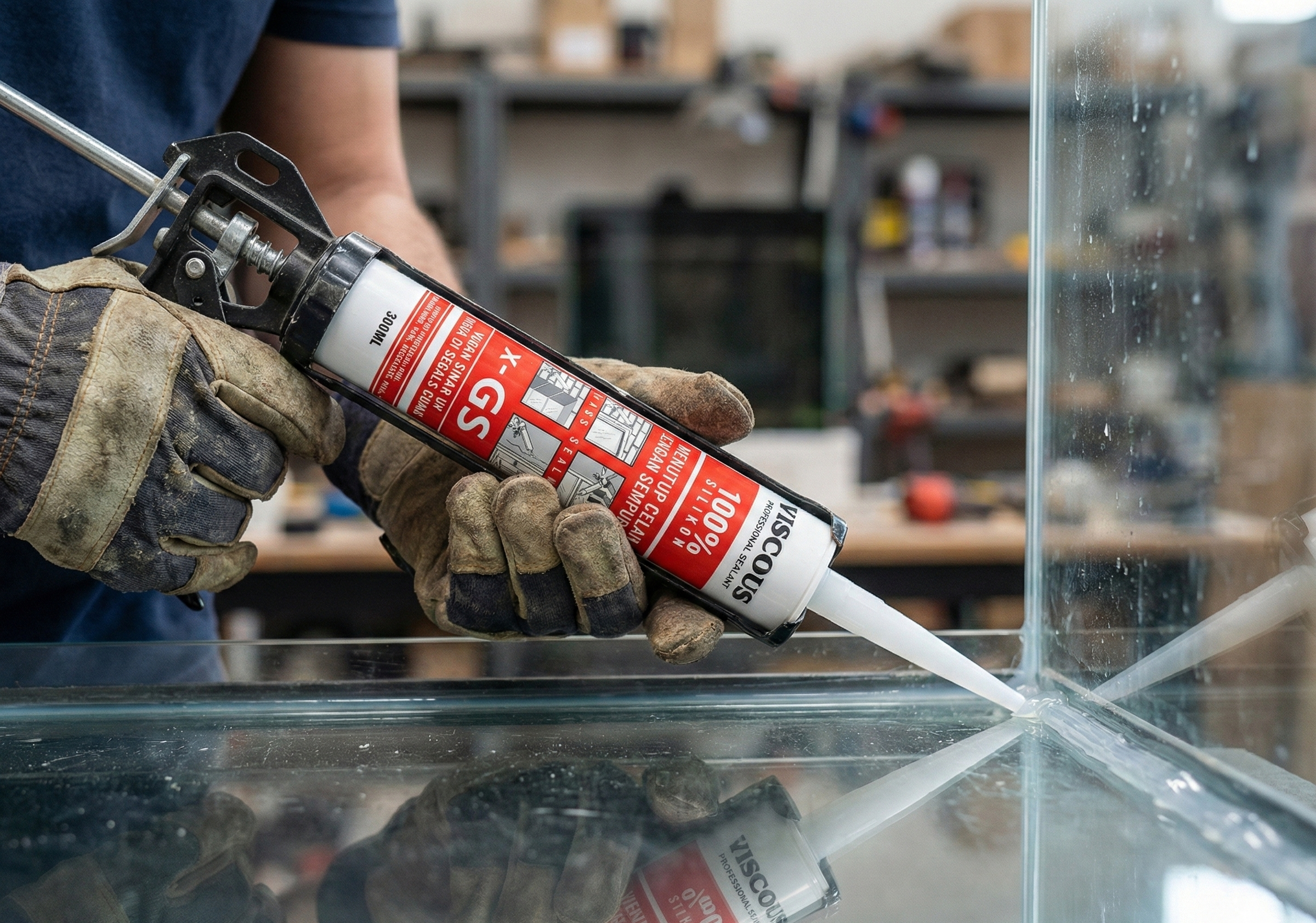
- Aquariums
- Fiberglass components
- Exterior sealing exposed to weather
In addition to strong adhesion, acid-cure silicone offers excellent resistance to:
- Water
- UV radiation
- Outdoor weather conditions
However, because of its acidic curing process, it is not suitable for every material. Certain metals and sensitive substrates may be adversely affected by prolonged contact with acid-cure formulations.
When Is a Neutral-Cure Silicone Sealant the Better Choice?
When a project involves multiple construction materials, neutral-cure silicone is generally the safer and more versatile option.
Its broad material compatibility makes it a popular choice for construction joints and building façade applications.
Neutral-cure silicone sealants are suitable for:
- Aluminum
- Glass
- uPVC
- Aluminum composite wall panels
- Polycarbonate
- Various construction materials
In addition to excellent adhesion, neutral-cure sealants offer outstanding flexibility, allowing them to accommodate joint movement caused by thermal expansion and structural movement.
For this reason, they are widely specified in modern building projects where long-term joint flexibility is essential.
Which Is Better: Acid-Cure or Neutral-Cure Sealant?
Neither product is universally better.
The best choice depends entirely on the substrate and intended application.
If your project primarily involves:
- Glass installation
- Aluminum fabrication
- Aquariums
- Fiberglass
an acid-cure silicone sealant is often the preferred solution.
If your project includes multiple materials such as:
- uPVC
- Polycarbonate
- Composite wall panels
- Mixed façade systems
a neutral-cure silicone sealant is generally recommended.
Tips for Choosing the Right Silicone Sealant
Before purchasing a sealant, consider the following factors.
1. Identify the Materials
Different substrates have different bonding requirements.
Whether you're working with glass, aluminum, uPVC, composite panels, or polycarbonate, always choose a sealant specifically designed for those materials.
2. Consider the Installation Environment
For outdoor applications, select a silicone sealant with excellent resistance to:
- UV radiation
- Rain
- Moisture
- Temperature fluctuations
Weather-resistant sealants provide longer-lasting performance in exterior environments.
3. Evaluate Joint Movement
Some construction joints experience continuous expansion and contraction.
For these applications, choose a sealant with high elasticity to maintain a durable seal without cracking or losing adhesion.
4. Buy from a Trusted Supplier
Purchasing sealants from an authorized distributor helps ensure product authenticity and provides access to professional technical advice for selecting the most suitable product.
Silicone Sealant Solutions for Different Building Applications
After understanding the differences between acid-cure and neutral-cure sealants, the next step is selecting the right product for your application.
Batara Group offers two professional silicone sealant solutions designed to meet a variety of construction requirements.
Viscous X-GS
Viscous X-GS is a 100% acid-cure silicone sealant specifically formulated for applications involving:
- Glass
- Aluminum
- Fiberglass
Its key benefits include:
- Strong adhesion
- Excellent water resistance
- UV resistance
- Weather durability
These properties make it an excellent choice for glass installation, aquariums, and exterior sealing applications.
Viscous X-NP
For projects involving multiple building materials, Viscous X-NP offers a versatile neutral-cure solution.
It is suitable for:
- Aluminum
- Glass
- uPVC
- Aluminum composite wall panels
- Polycarbonate
- Various construction materials
Its high elasticity allows sealed joints to accommodate thermal expansion and structural movement while maintaining long-term performance.
Frequently Asked Questions (FAQ)
What is silicone sealant?
Silicone sealant is a flexible sealing material used to fill joints and gaps, creating waterproof and airtight seals while maintaining elasticity after curing.
What is the difference between acid-cure and neutral-cure sealants?
The primary difference is material compatibility.
Acid-cure silicone is commonly recommended for glass, aluminum, and fiberglass.
Neutral-cure silicone is compatible with a wider range of materials, including uPVC, polycarbonate, composite panels, glass, and aluminum.
Selecting the correct product depends on the substrates involved.
Can silicone sealants be used outdoors?
Yes. For exterior applications, choose a silicone sealant specifically designed to withstand UV exposure, rain, moisture, and changing weather conditions.
Which sealant is best for glass installation?
Acid-cure silicone sealants are widely used for glazing because they provide excellent adhesion to glass surfaces.
How long does silicone sealant take to cure?
Most silicone sealants form a surface skin within approximately 5–10 minutes. Full curing typically requires 7–14 days, depending on joint thickness, temperature, humidity, and ventilation conditions.
Choose the Right Sealant for Reliable, Long-Lasting Performance
Understanding the differences between acid-cure and neutral-cure silicone sealants makes it easier to select the right product for your specific application.
Choosing a sealant that matches the substrate, environmental conditions, and movement requirements helps ensure stronger adhesion, longer service life, and better overall performance.
If you're unsure which sealant best suits your project, Batara Group can provide expert recommendations based on your application requirements. Whether you choose Viscous X-GS or Viscous X-NP, you'll receive a solution designed to deliver reliable sealing performance for residential, commercial, and industrial projects.