 Bahasa
Common Causes of Concrete Roof Slab Leaks and How to Detect Them Early
Leaks in concrete roof slabs typically do not appear suddenly. Instead, they often develop gradually from minor damage that goes unnoticed. Understanding the common causes of concrete roof slab leaks can help building owners identify early warning signs before the damage spreads and leads to higher repair costs.
Hairline Cracks Caused by Concrete Expansion and Contraction
Concrete structures continuously expand and contract due to daily temperature fluctuations, as explained in the article Concrete Roof Slab Waterproofing: A Technical Guide to Preventing Leaks.
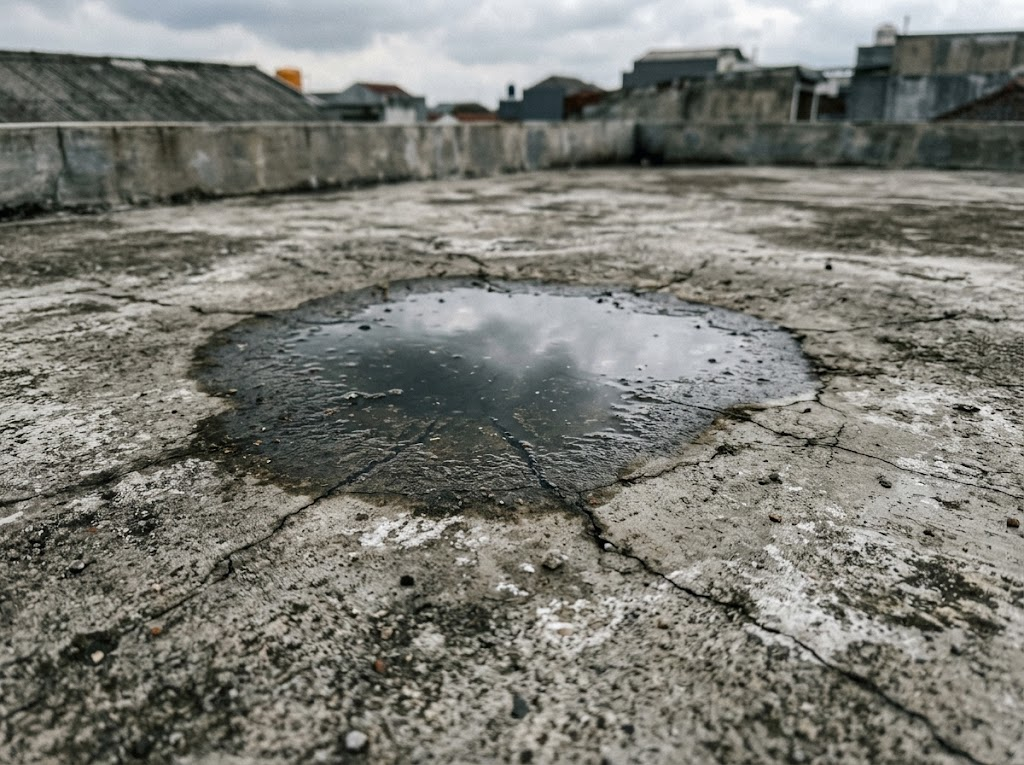
Uneven expansion and contraction can gradually cause hairline cracks to appear on the surface of the concrete roof slab. These small cracks can eventually become pathways for rainwater to penetrate the concrete structure and reach the interior of the building.
Poorly Optimized Drainage Systems
Standing water caused by an inadequate roof slope or clogged drainage channels can accelerate water seepage. Water that remains stagnant on the concrete surface for an extended period can put greater stress on the waterproofing layer and concrete surface compared with water that flows directly into the drainage system.
Proper roof drainage is therefore an important part of preventing concrete roof slab leaks and maintaining the long-term performance of the waterproofing system.
Age and Condition of the Waterproofing Layer
Waterproofing membranes and protective coatings have a limited service life, depending on the type of material used. Over time, continuous exposure to UV radiation, rain, and temperature fluctuations can reduce the performance of the waterproofing layer.
As the protective layer deteriorates, its ability to prevent water penetration can also decrease, increasing the risk of leaks and moisture damage.
Joints and Other Vulnerable Areas
Certain areas of a concrete roof slab are more vulnerable to leaks than others. These include:
- Joints between the roof slab and walls
- Areas around drainage pipes
- Roof corners
- Construction joints
- Connections between different building elements
Poorly executed joints and insufficient waterproofing details can become common sources of water seepage. These areas require particular attention during both installation and routine inspections.
Early Warning Signs of Concrete Roof Slab Leaks
Several early signs can indicate a potential leak before the damage becomes more extensive. Common warning signs include:
- Damp or wet stains appearing on the ceiling
- Bubbling or peeling paint
- Mold growth in specific areas
- Persistent moisture or musty odors
- Water stains that become more visible after heavy rain
The sooner these signs are identified, the sooner corrective action can be taken, potentially preventing more extensive damage and costly repairs.
Understanding the types and characteristics of waterproofing materials can also help determine the appropriate solution, as discussed in the article Building Waterproofing: Functions, Types, and How to Choose the Right Solution. One option for concrete roof slab protection is Casali Membrane Viscogum, which can be used as part of a waterproofing system for concrete surfaces.
By understanding the causes and early signs of concrete roof slab leaks, building owners can carry out regular inspections more effectively. Early detection and proper waterproofing maintenance can help prevent further water damage and reduce the risk of more serious structural problems in the future.