 Bahasa

Choosing the Right Phenolic Board Thickness for Different Applications
Phenolic board is available in various thickness options designed to accommodate different applications. Choosing the right thickness is important to ensure the material delivers the required performance in terms of strength, durability, stability, and cost efficiency.
Thickness for Freestanding Partitions
Freestanding toilet cubicle partitions without additional support in the middle generally require a thicker panel to maintain stability and reduce the risk of bending or flexing.
This is particularly important for partitions with larger dimensions, where panel size and unsupported span can have a significant impact on overall stability, as discussed in the article Phenolic Board for Toilet Cubicles: Why Is It Widely Used in Commercial Buildings?.
The appropriate thickness should ultimately be determined based on the panel dimensions, support system, hardware, and manufacturer's technical specifications.
Thickness for Wall Panels
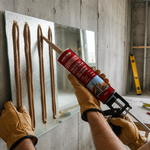
Unlike freestanding partitions, wall panels installed directly against a supporting structure can generally use thinner panels because they receive additional support from the structure behind them.
For this type of application, thickness selection is often influenced more by surface durability, appearance, installation requirements, and overall system design rather than structural strength alone.
Thickness for Worktops and Countertops
Phenolic board used as a worktop or countertop, including in laboratories and wet areas, generally requires sufficient thickness to withstand everyday loads without excessive deflection.
Longer countertop spans may require thicker panels or additional structural support to maintain stability during use. The required thickness should therefore be determined based on the expected load, panel dimensions, support spacing, and application requirements.
How Thickness Affects Material Weight
As panel thickness increases, the overall weight of the phenolic board also increases.
This factor should be considered for applications involving hinges, brackets, suspended systems, or other supporting hardware. The supporting structure and hardware should be capable of handling the weight of the selected panel to ensure safe and stable installation.
Choosing Thickness Based on Budget
Beyond functional requirements, panel thickness also affects the overall project cost. Selecting a thickness that matches the actual application requirements can help optimize the budget without unnecessarily increasing material costs.
Rather than simply choosing the thickest available option, consider the application, panel dimensions, support system, expected loads, durability requirements, and manufacturer's recommendations.
For more information about related products and phenolic board solutions, visit the Batara Group phenolic board product page.
By considering the application, structural requirements, installation system, and available budget, you can select the appropriate phenolic board thickness for better performance, durability, and cost efficiency.