 Bahasa

Waterproofing: How to Write Specifications for Bills of Quantities and Tender Documents
Have you ever, as a consultant or Quantity Surveyor (QS), faced a project dispute because a contractor used the cheapest available waterproofing material, failing to meet the project's expectations?
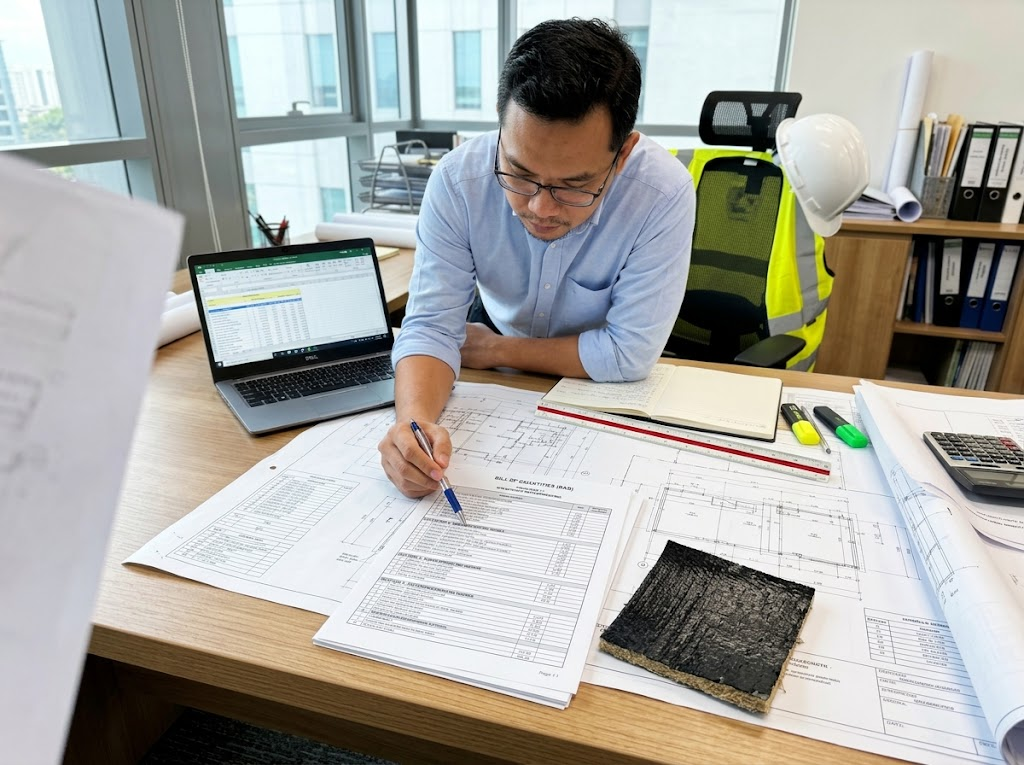
This problem often begins with vague waterproofing specifications in the Cost Estimate or Bill of Quantities (BoQ).
Many project planners simply write “Waterproofing Works – 1 Lot,” an overly general description that leaves room for contractors to reduce costs by selecting materials or methods that may not meet the intended requirements.
In this article, we explore how to prepare more precise technical specifications for project tender documents to help minimize the risk of future leakage claims and contractual disputes.
Why Must BoQ Specifications Be Detailed?
Overly general waterproofing specifications can lead to different interpretations of the material type, thickness, application method, and scope of work. As a result, tenderers may base their bids on different technical assumptions, making it difficult to compare their proposals on a like-for-like basis.
Clear and detailed descriptions help ensure that all tenderers understand the same scope of work and the technical requirements they must meet.
Essential Components of a Waterproofing Specification
To prepare a comprehensive tender document, include the following five technical components in your Bill of Quantities:
- Waterproofing System Type: Specify whether the project requires a liquid-applied coating, torch-applied bituminous membrane, or self-adhesive membrane.
- Thickness or Application Rate: State the required material thickness in millimeters (mm) or the coating application rate in kilograms per square meter (kg/m²), as applicable.
- Application Area: Distinguish between exposed outdoor areas subject to weather conditions and protected or internal areas.
- Surface Preparation: Require the contractor to include substrate cleaning and the application of a suitable primer in the scope of work.
- Warranty Requirements: Clearly state the warranty periods for the material and post-construction waterproofing performance, including the applicable terms and conditions.
For a fundamental reference, read our guide to Building Waterproofing: Functions, Types, and How to Choose the Right System.
Example Specifications for Different Building Areas
Different building areas present different levels of water ingress risk and therefore require specific waterproofing details in the BoQ.
- Toilets and Balconies: Specify a “liquid-applied polyurethane coating, 1.5 mm thick, with the waterproofing layer turned up 200 mm along the parapet wall,” subject to the selected system's requirements.
- Concrete Roof Slabs and Basements: Specify a “torch-applied modified bituminous waterproofing membrane (atactic polypropylene, or APP), with a minimum thickness of 3 mm,” where suitable for the project conditions and design.
Learn more about assessing these risks in our guide to Building Areas That Need Waterproofing the Most.
Common Specification Mistakes That Can Lead to Claims
One important consideration when preparing a BoQ is ensuring that the measurement units are consistent with the scope of work being quantified.
Where appropriate, measure waterproofing work in square meters (m²) rather than automatically pricing the entire scope as a lump sum (LS). A clearly defined measurement basis can improve cost transparency and help reduce the risk of budget overruns. Read our guide to Waterproofing Prices per m² for more accurate cost planning.
Another significant risk is failing to specify a water ponding test, also known as a flood test, in the project requirements.
Consider including a field-testing clause that defines the testing procedure, duration, acceptance criteria, and responsibility for rectifying any leaks. Refer to our guide on waterproofing flood tests for further information.
For membrane systems, the specification should also include joint and seam details, including the required overlap between membrane sheets. These requirements can be developed further using a dedicated guide to waterproofing membrane joint details.
Waterproofing Materials for Tender Projects from Batara Group
Preparing waterproofing specifications requires careful consideration of material suitability, design requirements, and product availability for the project.
Batara Group offers a selection of waterproofing materials for different construction applications, including products from Casali and Wisproof.
To support your tender preparation process, contact the Batara Group team for product information and available technical documentation, including Technical Data Sheets (TDS). These documents can serve as references when defining appropriate material specifications.
Clear specifications help align technical requirements and the scope of work throughout the tender process. Contact Batara Group to learn more about waterproofing products suited to your project requirements.