 Bahasa

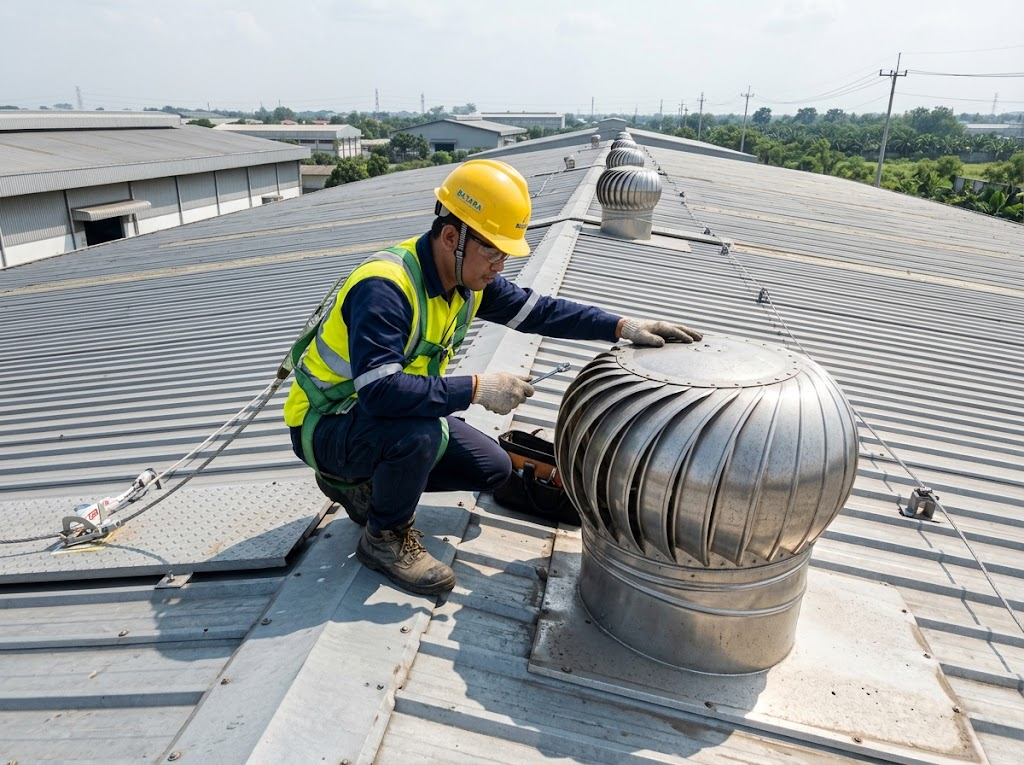
Roof Ventilator Stuck or Noisy? Here's How to Fix It!
Have you ever heard a loud squeaking noise coming from the roof of your factory, or noticed that the roof ventilation turbine in your warehouse has suddenly stopped spinning?
Roof ventilators use wind and air movement to help exhaust indoor air without relying on electricity.
Problems arise when this natural ventilation system experiences mechanical issues, causing production facilities to become hot and stuffy again.
This article explores the main reasons why a roof ventilator may become stuck or noisy, along with practical troubleshooting steps to help address these issues.
How Does a Roof Turbine Ventilator Work?
A roof turbine ventilator uses wind and temperature differences to help remove air from inside a building.
When wind strikes the turbine fins, the turbine rotates and helps draw indoor air out of the building. In addition, warm air rising due to temperature differences can support airflow through the ventilator.
The turbine’s performance and rotational speed depend on wind conditions, airflow inside the building, and the mechanical condition of components such as the bearings and shaft. If a component or airflow problem occurs, the turbine may rotate more slowly or fail to operate as intended.
Common Reasons Why a Roof Turbine Gets Stuck or Stops Spinning
Several technical issues can prevent this natural ventilation device from rotating efficiently:
- Insufficient Air Intake: If the supply of incoming air is limited by inadequate openings or ventilation, airflow through the turbine may become less effective.
- Damaged Bearings: Exposure to industrial dust, moisture, and corrosion can affect bearing performance, causing the shaft to rotate with increased resistance or unevenly.
- Incorrect Installation Alignment: If the base is not installed level and properly aligned, the shaft may experience uneven loading, potentially affecting turbine rotation.
- Accumulated Dirt and Debris: Dirt, dust, or other debris trapped between the turbine fins can obstruct movement and interfere with normal operation.
Before undertaking major repairs, read our guide, 5 Things to Consider Before Installing a Roof Turbine Ventilator, to help ensure that the original installation was carried out correctly.
Why Is Your Roof Ventilator Making Noise?
A loud squeaking or metallic rubbing sound often indicates a problem with the bearings, such as inadequate lubrication or wear.
In addition, aluminum turbine fins that have become dented by hard impacts or strong storms may rub against the surrounding frame as the turbine rotates.
These vibrations can be more than just a noise nuisance. They may also contribute to loosening roof fasteners, potentially increasing the risk of leaks during rainfall.
Routine Maintenance and When to Replace the Unit
To help prevent serious damage, perform routine maintenance at least every six months. This includes removing dust from the turbine fins and lubricating the bearings where appropriate and in accordance with the manufacturer's maintenance instructions.
However, if the bearings are broken or the main shaft is bent, replacing the entire unit may be more cost-effective than carrying out partial repairs.
To estimate how many replacement units your facility may need, read our guide on How to Calculate the Number of Roof Turbine Ventilators.
Reliable Roof Ventilation Solutions from Batara Group
Reliable ventilation systems for factories and warehouses require roof exhaust units that are properly selected, durable, and easy to maintain.
As a specialist building materials distributor, Batara Group offers a range of high-quality roof turbine ventilators for industrial facilities.
One available option is Ozvent, which features a dual-bearing system designed to support smooth turbine rotation. To find a roof turbine ventilator that suits your building's requirements, contact the Batara Group team for product information and technical specifications.