 Bahasa

Waterproofing: How to Perform a Flood Test to Prevent Leaks
Have you ever had to remove newly installed bathroom tiles because water was still seeping through to the ceiling below?
This situation can lead to additional repair work, longer project timelines, and increased renovation costs.
Water seepage often occurs because contractors or homeowners rush into the finishing stage without first testing the quality and performance of the waterproofing system.
On-site testing is an important quality control step to evaluate waterproofing performance before the surface is covered. This article explains the flood test method, the right time to perform it, and the practical steps involved.
What Is a Flood Test?
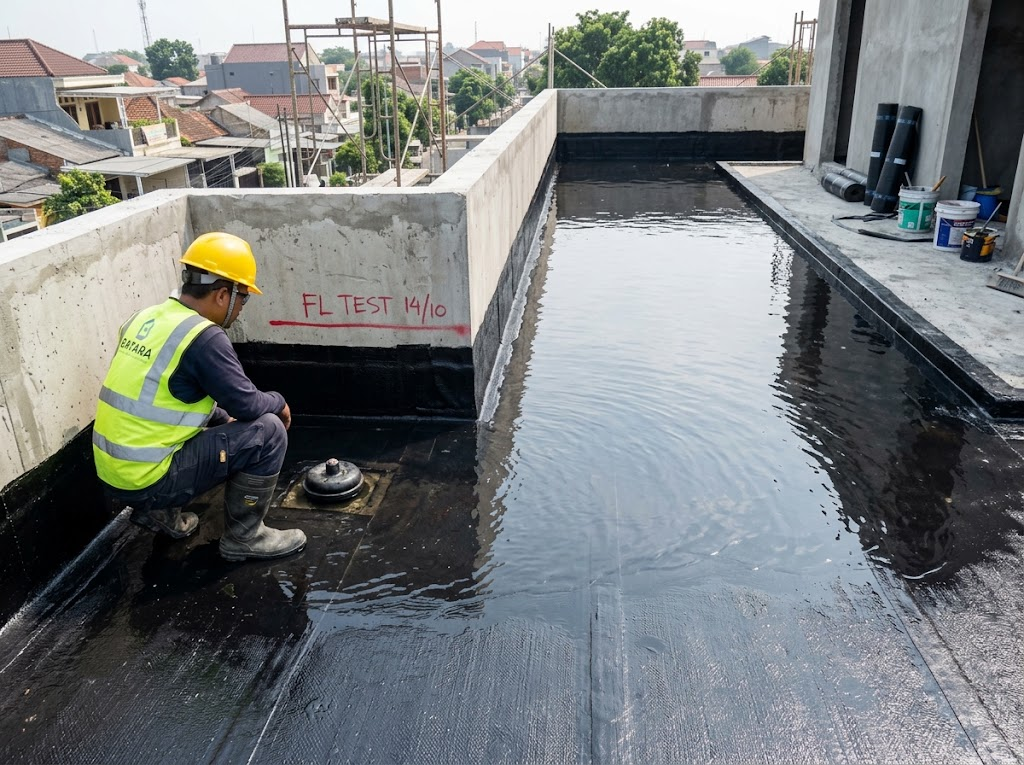
Technically, a flood test is an inspection procedure in which a waterproofed surface is intentionally flooded with water to identify potential leaks.
The test involves filling an area treated with a waterproofing membrane or coating with water for a specified period. This process helps identify signs of leakage before the surface is covered with finishing materials, such as a screed layer or ceramic tiles.
When Is the Right Time to Perform a Flood Test?
Never fill the area with water immediately after applying a waterproofing coating, installing a waterproofing membrane, or torch-applying a bituminous membrane to a concrete floor.
You must wait until the waterproofing layer has fully dried and cured.
The required drying and curing time varies depending on the type of waterproofing material used. Always follow the manufacturer's instructions and specifications provided in the product's Technical Data Sheet (TDS).
For optimal results, review our guide on Important Considerations Before Applying Bathroom Waterproofing to ensure the substrate is properly prepared before testing.
Practical Steps for Performing a Flood Test
For areas frequently exposed to water, follow these step-by-step instructions to conduct a flood test and assess the waterproofing system.
- Seal the Drainage Outlets: Securely block all floor drains and drainage pipes using rubber test plugs or temporary watertight stoppers.
- Fill the Area with Water: Slowly introduce clean water until it reaches a safe level, typically below the bottom edge of the wall skirting or another appropriate containment height.
- Mark the Water Level: Use a waterproof marker or durable tape to mark the initial water level on the wall.
- Monitor the Test Duration: Leave the water in place for the specified testing period, following the manufacturer's recommendations for the waterproofing product.
- Inspect the Results: If the water level drops significantly beyond what could reasonably be attributed to evaporation, or damp patches appear on the ceiling or surfaces below, investigate the area for potential leaks.
If the test fails, the waterproofing system must be inspected and repaired as necessary before proceeding with the finishing work. For further guidance, read our article on Signs That Your Waterproofing Needs to Be Replaced or Renewed.
Flood Testing for Concrete Roof Slabs
For concrete roof slabs designed for rooftop use, a flood test can help identify potential leaks before the finishing stage begins.
This test helps detect signs of water seepage in critical areas, including floor-to-wall junctions, construction joints, and around drainage pipes. If a leak is detected, the affected area must be inspected and repaired according to the type of waterproofing system installed.
Once the repairs are complete, perform another flood test to verify that there are no signs of leakage before proceeding with the finishing work, such as installing artificial grass or other rooftop surface materials.
For additional guidance, explore our article on How to Choose Waterproofing for Homes in Flood-Prone and Humid Areas.
Trust Batara Group for Your Building Solutions
Preventing leaks requires high-quality waterproofing materials that provide the appropriate flexibility and resistance to prolonged water exposure, combined with precise surface preparation and proper installation techniques.
As a trusted supplier of architectural and building materials, Batara Group offers a range of premium waterproofing products from leading specialist brands, including Casali and Wisproof.
Our technical support team is ready to provide guidance on product specifications, Technical Data Sheets, and appropriate testing procedures for your residential or commercial project.
To explore suitable waterproofing products and obtain technical recommendations tailored to your project requirements, contact the Batara Group team today.