 Bahasa
Torch-Applied Waterproofing Membrane: A Complete Guide for Flat Roof Protection
Flat concrete roofs are among the most vulnerable parts of modern buildings when it comes to water ponding. Without a reliable waterproofing system, standing water gradually penetrates the concrete's porous structure, eventually reaching the reinforcing steel.
Over time, this can lead to corrosion, structural deterioration, and severe ceiling leaks inside the building. To prevent these issues, torch-applied waterproofing membranes have become one of the most trusted commercial waterproofing solutions for protecting flat roofs and concrete structures.
This heavy-duty waterproofing system is specifically engineered to withstand continuous water exposure and harsh weather conditions. This guide explains the key specifications, material properties, and installation procedures you need to know before selecting a waterproofing system for your project.
What Is a Torch-Applied Waterproofing Membrane?
Unlike liquid waterproof coatings, a torch-applied waterproofing membrane is supplied in roll form with a factory-controlled thickness that provides consistent waterproof protection across the entire concrete surface.
Because the membrane is manufactured under controlled conditions, it offers more uniform performance than many site-applied liquid coatings.
Bitumen-Based Waterproofing Material
The primary component of a torch-applied membrane is modified bitumen, enhanced with high-performance elastomeric or plastomeric polymers such as Atactic Polypropylene (APP).
The polymer modification significantly improves the membrane's flexibility, allowing it to accommodate the natural expansion and contraction of concrete structures caused by daily temperature changes.
Think of the membrane as a thick, durable protective skin that completely seals the concrete surface, preventing water from penetrating through microcracks and pores.
Waterproofing Membrane Specifications and Thickness
Selecting the correct membrane thickness directly affects durability, mechanical strength, and the overall lifespan of the waterproofing system.
Using an underspecified membrane often results in premature deterioration and increased maintenance costs.
Standard Thickness Options: 3 mm and 4 mm
Commercial construction projects typically specify 3 mm or 4 mm torch-applied waterproofing membranes.
A 3 mm membrane is commonly used for standard waterproofing applications where the membrane will remain protected from heavy mechanical loads.
A 4 mm membrane is recommended for areas subject to greater mechanical stress or where a protective screed or cement topping will be installed above the membrane.
High-quality waterproofing membranes also incorporate a non-woven polyester reinforcement within the core. This reinforcement improves tensile strength and tear resistance while allowing the membrane to accommodate minor structural movement without failure.
Recommended Applications
Thanks to their durability, flexibility, and resistance to standing water, torch-applied waterproofing membranes are suitable for a wide range of commercial and industrial waterproofing applications.
Flat Roofs and Basements
Flat concrete roofs are the most common application because the membrane performs exceptionally well under prolonged exposure to ponding water without peeling or losing adhesion.
Torch-applied membranes are also widely used for:
- Flat concrete roofs
- Underground basements
- Retaining walls
- Podium decks
- Underground concrete structures
In below-grade applications, the membrane protects structures against hydrostatic pressure, preventing groundwater from penetrating horizontally through basement walls.
Installation Procedure for Torch-Applied Waterproofing Membranes
The long-term performance of any waterproofing system depends largely on correct installation techniques and strict adherence to professional installation standards.
Overlap Requirements and Torch Application
One of the most common causes of waterproofing failure is improper sealing at membrane joints.
To ensure a continuous waterproof barrier, adjacent membrane sheets should overlap by:
- 10 cm (4 inches) along the side laps
- 15 cm (6 inches) at the end laps
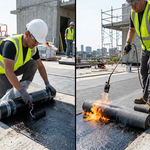
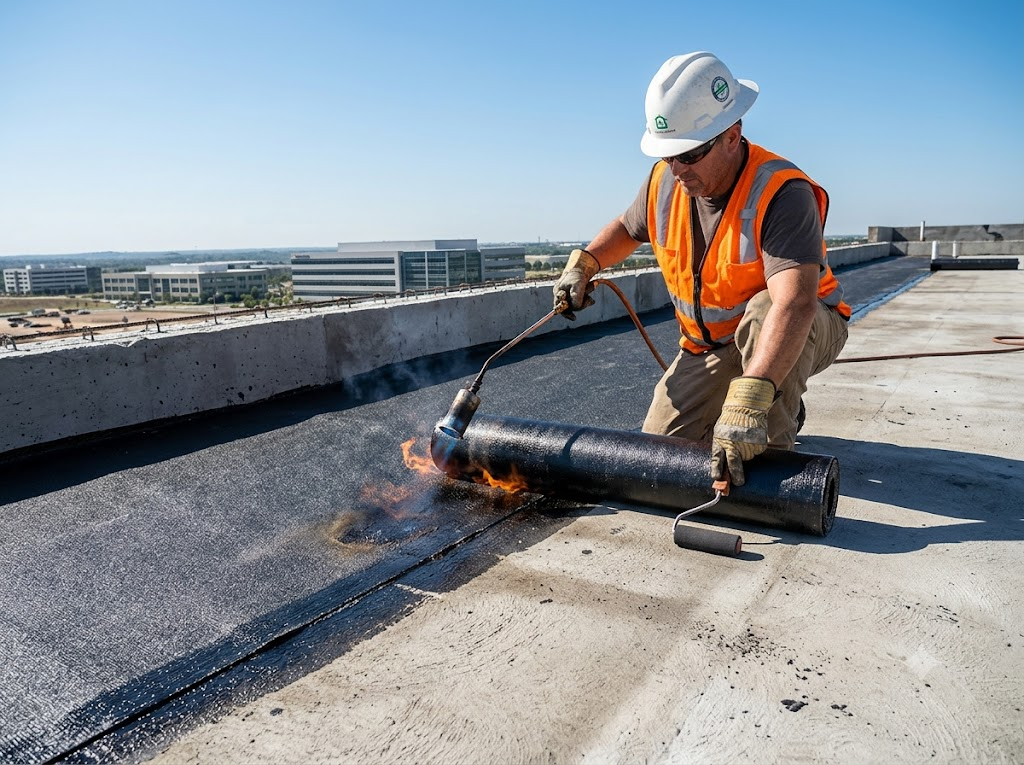
During installation, the underside of the membrane is heated using a gas torch until the modified bitumen begins to melt.
The installer then presses the overlap firmly with a trowel or roller to eliminate trapped air and create a fully bonded waterproof seam.
Before applying the membrane, the concrete substrate should first be coated with a bitumen primer. The primer improves adhesion by sealing surface dust and preparing the concrete for maximum bonding strength.
For complete building protection, always ensure that the torch-applied membrane is installed as part of a comprehensive waterproofing system recommended by the manufacturer.
Frequently Asked Questions (FAQ)
How long does a torch-applied waterproofing membrane last?
When professionally installed and protected with a screed or protective topping, a high-quality torch-applied waterproofing membrane can provide reliable waterproof protection for 10 to 15 years or more, depending on environmental conditions and maintenance.
Can the membrane be installed on newly poured concrete?
No. The concrete substrate must be completely cured and dry before installation.
Excess moisture trapped within the concrete can generate vapor pressure during torch application, leading to blistering and reduced membrane adhesion.
Why is a bitumen primer necessary before installation?
A bitumen primer serves two important purposes:
- It seals dust and loose particles on the concrete surface.
- It creates an adhesive base layer that allows the melted bitumen membrane to bond securely with the substrate.
Proper priming is essential for achieving long-lasting waterproof performance.
Protect Your Building with the Right Waterproofing System
Choosing the correct waterproofing membrane and following proper installation procedures are essential for protecting your building against leaks, structural deterioration, and costly repairs.
Whether you're waterproofing a commercial roof, basement, or concrete structure, selecting high-quality materials and professional installation methods will maximize durability and long-term performance.
Contact Batara Group to discuss the best waterproofing membrane specifications for your project. Our technical experts are ready to help you select commercial-grade waterproofing solutions that deliver reliable, long-lasting protection against water intrusion.