 Bahasa
Self-Adhesive vs Torch-On Waterproofing Membrane: Which One Should You Choose?
In commercial construction, high-performance protection against water exposure and ponding often relies on sheet-applied asphalt or bitumen waterproofing membranes. However, when it comes to installation on site, contractors often have to choose between two different application methods.
The decision is usually between the conventional torch-on method or the self-adhesive method. This choice is not simply a matter of preference—it can affect installation time, equipment requirements, project costs, and, most importantly, site safety considerations.
To help you select the appropriate installation specification, let’s examine the technical characteristics and practical differences between these two heavy-duty waterproofing membrane systems.
Understanding Torch-On and Self-Adhesive Membranes
At a glance, both systems are supplied as rolls of reinforced bituminous membrane, often using a polyester reinforcement layer. Their main difference lies in how the membrane is bonded to the concrete substrate.
Torch-On Method (Torch-Applied Membrane)
The torch-on system is one of the most established methods for installing bituminous waterproofing membranes.
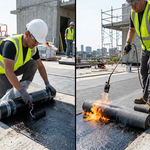
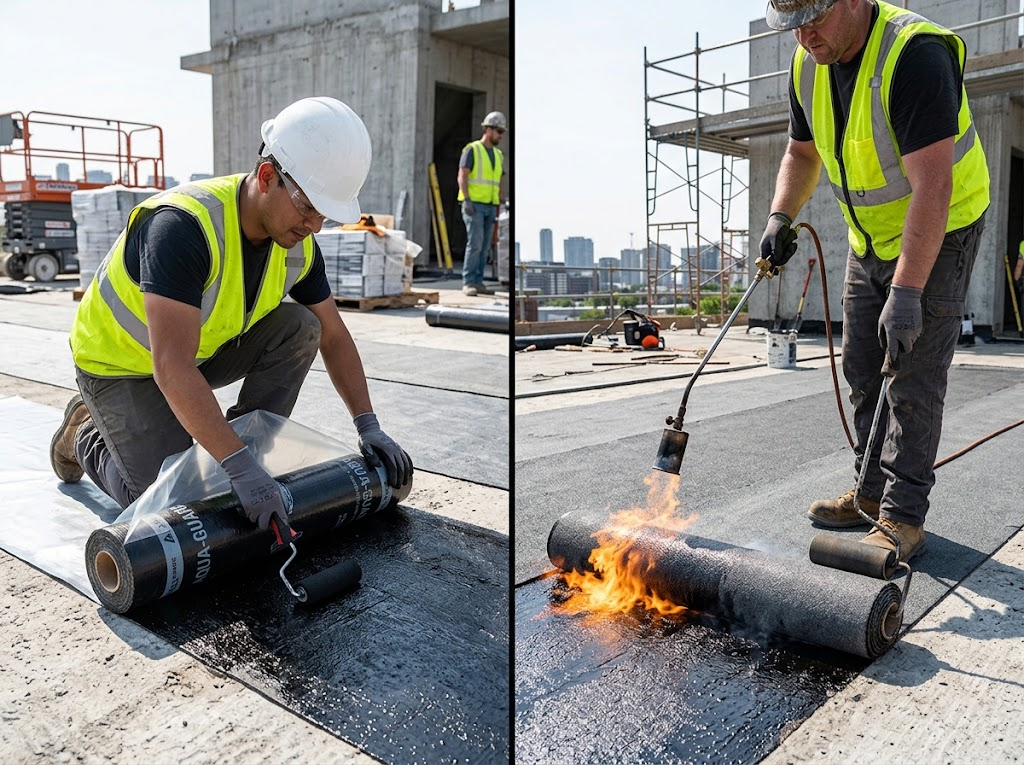
During installation, the underside of the membrane is heated using a gas torch until the bonding layer softens or melts. The heated membrane is then pressed onto a prepared concrete substrate, typically with a suitable primer, to form the waterproofing layer.
This method requires trained applicators who can control the heating process and ensure consistent bonding without overheating or damaging the membrane.
Self-Adhesive Method
In contrast, a self-adhesive membrane works more like a large industrial adhesive sheet.
The underside of the membrane is manufactured with a pressure-sensitive adhesive layer protected by a thin release film. During installation, the applicator removes the release film, positions the membrane on the prepared substrate, and presses it using a suitable roller to achieve proper contact—without the need for an open flame.
Technical and Practical Comparison
The appropriate choice depends on the operational priorities and conditions of your project. Here is a practical comparison:
Installation Speed and Equipment Costs
- Self-Adhesive: Installation can be more straightforward because it eliminates the membrane-heating process. It also does not require gas cylinders or torch equipment, potentially reducing equipment requirements and setup time.
- Torch-On: Requires heating equipment to activate the bituminous bonding layer. The process requires proper temperature control and application technique to achieve consistent adhesion.
Long-Term Adhesion
- Torch-On: The heated bitumen bonding layer can create a strong bond with the prepared substrate. Long-term adhesion still depends on substrate condition, membrane specifications, heating technique, and installation quality.
- Self-Adhesive: Uses a pressure-sensitive adhesive layer to create direct adhesion without heating. Its long-term performance depends on the condition and cleanliness of the substrate, environmental conditions, membrane specifications, and correct installation technique.
How to Choose Based on Project Conditions
Where should each system be used? Selecting the right application method requires consideration of the work environment, access, ventilation, substrate condition, and safety requirements.
Open Flat Roofs vs. Confined Areas
Large, open rooftop areas or concrete roof slabs may be suitable for torch-on membranes, particularly when there is sufficient ventilation and the work area can be properly controlled for hot-work activities.
Meanwhile, self-adhesive membranes can be considered for smaller, confined, or poorly ventilated areas where the use of an open flame may be undesirable. Because the installation does not involve torching, the application process can be simpler in areas with restrictions on hot work.
The suitability of either system should still be evaluated based on the manufacturer's installation requirements and actual site conditions.
Workplace Safety Considerations
Torch-on installation requires additional attention to occupational health and safety because it involves an open flame and hot-work activities. Site conditions, combustible materials, ventilation, fire prevention measures, and control of ignition sources must be carefully managed throughout installation.
Self-adhesive membranes do not require an open flame, making them an option for areas where hot-work activities are restricted or undesirable. However, standard workplace safety procedures remain essential during substrate preparation, membrane handling, cutting, and installation.
Consult Your Project Specifications
Every building presents different structural and environmental challenges. Make sure your Waterproofing system is planned according to the project requirements, using products from established brands such as Casali and Wisproof.
To further understand waterproofing applications, explore our technical guide on Torch-On Waterproofing Membrane: A Guide for Flat Roofs.
You can also compare different waterproofing approaches in Liquid Waterproofing vs. Torch-On Membrane: An Analysis of the Right Choice and refer to our guide, Waterproofing Membrane vs. Coating: Understanding the Differences and Applications.
Protecting your building assets starts with selecting the right waterproofing system and installation method. Contact the Batara Group team to discuss which application approach is more suitable for your project's site conditions, safety requirements, and technical specifications.