 Bahasa
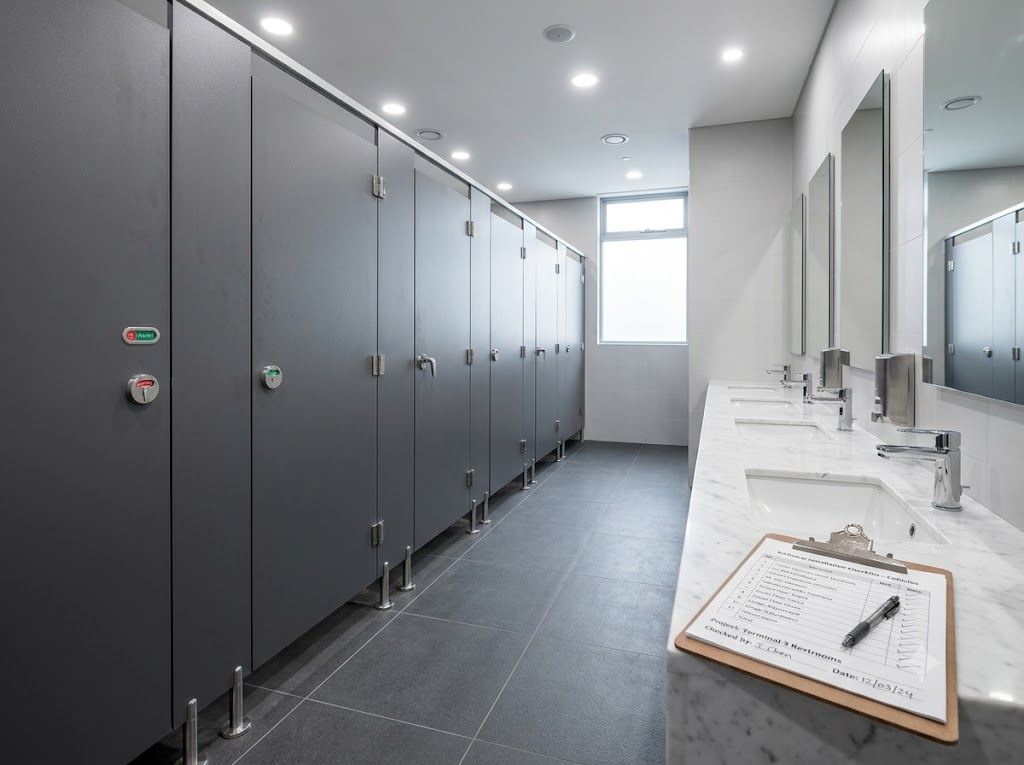
Phenolic Toilet Partitions: The Complete Specification Checklist for Commercial Projects
Phenolic toilet partitions are sanitary cubicle systems manufactured from layers of kraft paper impregnated with phenolic resin and compressed under high pressure and temperature. The result is a solid, high-density panel specifically engineered for demanding wet-area environments.
Public facilities with heavy daily traffic require materials that can withstand constant use while maintaining structural integrity and hygiene. Choosing the wrong specifications can lead to premature damage, panel swelling, and costly maintenance issues. This guide provides the essential technical checklist to help you select the right phenolic partition system for long-lasting commercial performance.
Essential Specification Standards for Public Toilet Partitions
High-traffic facilities such as airports, hospitals, educational institutions, office buildings, and shopping malls demand strict architectural and construction standards. Material selection should prioritize more than just appearance.
Commercial toilet partitions must withstand thousands of door operations every day while continuously exposed to humid conditions, cleaning chemicals, and water. Therefore, selecting the appropriate materials and hardware is critical to ensuring durability and minimizing maintenance costs.
Water Resistance Requirements
Commercial restroom cleaning typically involves wash-down systems or high-pressure water cleaning. As a result, partition materials must be completely water-resistant on all surfaces.
Conventional materials such as plywood, laminated wood, or hollow PVC panels often deteriorate when exposed to moisture over extended periods. Common issues include swelling, warping, delamination, and structural failure.
Material Comparison for Toilet Cubicles
| Performance Criteria | Phenolic Board | PVC | Plywood / Standard HPL |
|---|---|---|---|
| Water Resistance | 100% Waterproof | Water Resistant (Can Become Brittle) | Highly Susceptible to Moisture and Rot |
| Impact Resistance | Excellent (Solid Core) | Low (Prone to Cracking) | Moderate (Easily Dented) |
| Hygiene | Superior (Mold Resistant) | Moderate (Risk of Internal Bacterial Growth) | Poor (Can Absorb Moisture, Odors, and Mold) |
Material and Physical Specification Checklist
Before purchasing or installing toilet cubicles, verify that all physical specifications comply with commercial building standards. Panel dimensions, composition, and structural properties should be carefully inspected to ensure long-term reliability.
Standard Phenolic Board Thickness
Minimum Thickness: 12 mm
For commercial toilet partitions, the recommended industry standard is 12 mm thick solid phenolic board. This thickness provides the optimal balance between structural rigidity, dimensional stability, and manageable door weight.
A properly specified 12 mm panel minimizes the risk of warping while reducing unnecessary stress on hinges and supporting hardware.
Solid-Core Construction
Always ensure the panels are manufactured from solid phenolic board without hollow cavities. A solid-core construction provides superior density, mechanical strength, and long-term durability.
Advantages of Phenolic Toilet Partitions
Investing in solid phenolic partitions offers significant long-term value by reducing maintenance costs and extending the service life of public restroom facilities.
Superior Impact Resistance
High-density phenolic panels are engineered to withstand heavy mechanical impacts caused by luggage carts, cleaning equipment, accidental collisions, and even acts of vandalism without denting or cracking.
This makes phenolic partitions an excellent solution for high-traffic public environments.
Non-Porous and Hygienic Surface
Phenolic boards feature a non-porous, smooth surface that prevents water, dirt, bacteria, mold, and unpleasant odors from penetrating the panel.
Because moisture cannot be absorbed into the core, phenolic toilet partitions maintain a cleaner, more hygienic environment while minimizing the risk of permanent staining and odor buildup.
Installation Requirements
Even the highest-quality panels require a properly engineered installation system to deliver optimal performance. The supporting framework and hardware must be capable of securely carrying the weight of the partition system.
Essential Hardware Checklist
As part of every commercial installation, all supporting hardware should be manufactured from Grade 304 stainless steel to provide excellent corrosion resistance in humid environments.
Essential hardware includes:
- Adjustable stainless steel support legs
- Self-closing door hinges
- Red/green occupancy indicator locks
- Stainless steel wall brackets and corner supports
Using corrosion-resistant stainless steel hardware is essential because commercial restrooms are constantly exposed to water, humidity, steam, and chemical cleaning agents.
Frequently Asked Questions (FAQ)
What is the standard thickness for phenolic toilet partitions?
The recommended standard for commercial and public facilities is 12 mm. This thickness provides excellent structural stability while supporting heavy door loads and resisting daily impacts.
Are phenolic toilet partitions mold resistant?
Yes. Because phenolic panels have a solid, non-porous surface, they do not absorb water or moisture. This significantly reduces the risk of mold growth, bacterial contamination, and unpleasant odors.
How should phenolic toilet partitions be maintained?
Maintenance is simple and cost-effective. Clean the panels regularly using a microfiber cloth and a mild cleaning solution. Avoid abrasive brushes or harsh tools that could scratch the decorative surface.
Build Long-Lasting Public Restroom Facilities with the Right Specifications
Selecting the correct sanitary partition system is a crucial investment in the longevity, safety, and cleanliness of your building. By choosing high-quality phenolic toilet partitions with the proper specifications, you can reduce maintenance costs while ensuring reliable performance for years to come.
Contact Batara Group today to discuss your project requirements and receive expert recommendations for commercial-grade phenolic toilet partition systems tailored to your facility.