 Bahasa
Phenolic Board vs HPL: The Right Choice for Kitchen Sets & Outdoor Furniture
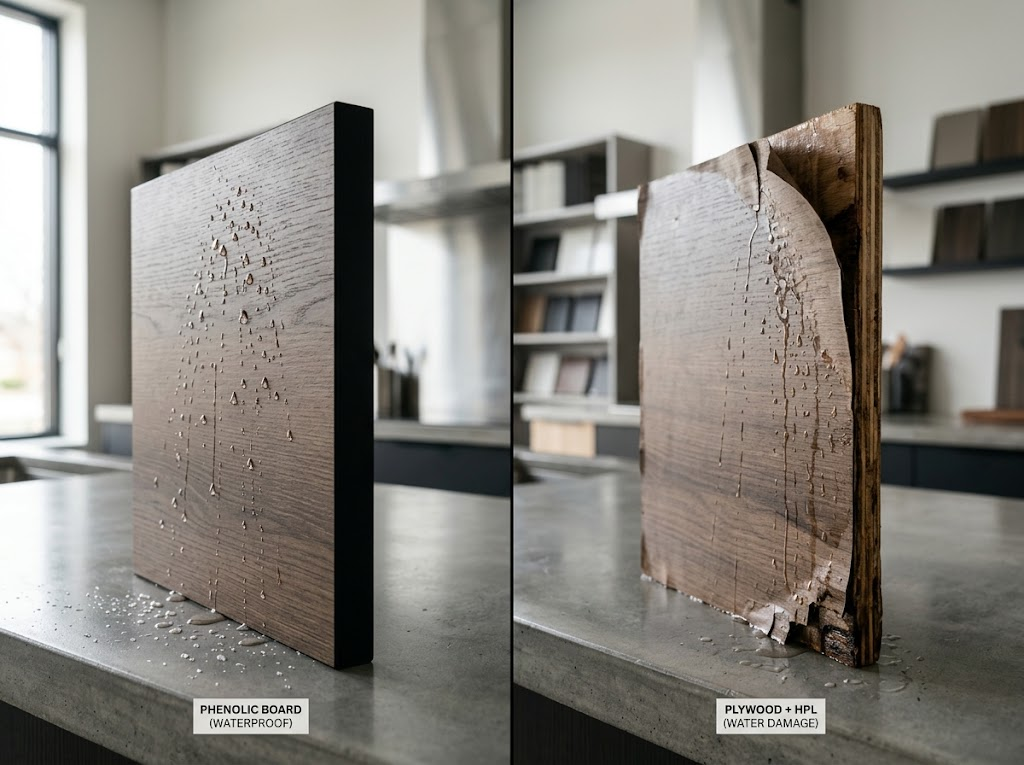
Damage to kitchen sets and outdoor furniture caused by peeling, swelling, or material deterioration is a common concern among homeowners and interior designers. In many cases, these problems can be linked to selecting a surface or substrate material that is not suitable for wet and humid environments.
For areas with high exposure to water, phenolic board offers a solid, moisture-resistant material solution that differs fundamentally from conventional decorative laminates. This dense composite material is designed to provide water resistance throughout the panel, including its core. Let’s take a closer technical look at the differences so you can specify the right material for your project.
Why Can HPL Be Vulnerable in Humid Areas?
High Pressure Laminate (HPL) is widely used in furniture manufacturing because it offers thousands of decorative patterns at relatively affordable prices. However, HPL is essentially a thin surface laminate, typically around 0.7 mm to 1 mm thick.
Decorative HPL is generally applied as a surface layer over substrates such as MDF, particleboard, or plywood, using an adhesive system suitable for the selected materials and application.
In wet areas, one potential weakness of this system is found around the corners and edges. If the laminate edge is not properly sealed or becomes exposed, moisture from steam, splashing water, or rain can potentially reach the substrate. Over time, this may affect adhesive performance, cause the HPL to bubble or lift, and contribute to deterioration of the underlying material.
Phenolic Board Characteristics for Long-Lasting Furniture
As a more robust material option, phenolic board has fundamentally different characteristics from conventional laminate-and-substrate systems. It does not require a separate wood-based core because the panel itself is a solid composite material.
Phenolic board is manufactured from multiple layers of kraft paper impregnated with resin and then compressed under high pressure and temperature. This manufacturing process produces a dense, rigid composite panel with water-resistant properties throughout its structure.
Comparison Table: Phenolic Board vs HPL
For interior designers and furniture contractors, selecting the right moisture-resistant material requires careful consideration of the application, environmental conditions, and product specifications. Here is a general comparison:
| Technical Parameter | Phenolic Board (Solid) | HPL (Laminate + Plywood) |
|---|---|---|
| Water Resistance | Water-resistant throughout the panel, depending on product specifications | Primarily provides surface protection; substrate remains dependent on its own moisture resistance |
| Edge Durability | Solid panel construction; additional edge banding may not be required depending on the application | Exposed edges require proper finishing and sealing to help prevent moisture from reaching the substrate |
| Heat Resistance | High heat resistance, depending on product formulation and classification | Varies according to the HPL, adhesive, and substrate specifications |
| Aesthetic Options | Solid colors and wood-look patterns, with the finish integrated into the panel | Wide variety of decorative patterns and finishes |
| Cost Range | Premium; suitable for applications where long-term durability is a priority | Generally more economical, particularly for suitable indoor applications |
Case Studies: Applications in the Field
Applying the right material specification to critical areas can help reduce the risk of premature damage and future maintenance costs.
Wet Kitchen Applications (Kitchen Sets)
Sink areas and lower kitchen cabinets are frequently exposed to moisture and water splashes.
Using phenolic board as the primary material for wet-area cabinet carcasses can provide a more moisture-resistant construction compared with conventional wood-based substrates. Its solid, non-wood-based composition can also help reduce concerns associated with wood deterioration in humid environments.
However, proper detailing around plumbing connections, joints, fasteners, and other potential water-entry points remains important to ensure long-term performance.
Garden and Balcony Furniture (Outdoor Applications)
Outdoor furniture such as garden tables, terrace benches, and barbecue cabinets are exposed to sunlight, rain, and changing weather conditions. Therefore, the selected material should have specifications suitable for outdoor use.
For these applications, choose an exterior-grade phenolic board with UV and weather-resistance specifications appropriate for the intended environment. HPL can also be used in certain outdoor applications, but its suitability depends on the specific product and its manufacturer’s outdoor-use specifications. Not all HPL products are designed for prolonged outdoor exposure.
Plan Your Furniture Material Requirements
Selecting the wrong material specification can affect more than just aesthetics—it may also increase the risk of premature deterioration and future maintenance costs. For moisture-prone applications, consider commercial-grade Phenolic Board, such as the Smartcubic product range, based on the requirements of your project.
To learn more about the performance of phenolic board in moisture-prone environments, read Phenolic Board vs Multipleks: Which Is More Durable for Humid Areas? and explore our technical guide on Choosing the Right Phenolic Board Thickness for Different Applications.
Consult the Batara Group team about your project’s material requirements to determine the appropriate specifications for the intended application and environmental conditions.