 Bahasa

Glass Silicone Sealant: The Best Solution for Leak-Free Windows
Have you ever noticed water pooling on your window sill after heavy rain? Water leaks around windows don't just damage your interior paint—they can also encourage mold growth that affects indoor air quality and your family's health.
In many cases, the cause is surprisingly simple: the seal between the glass and the window frame has deteriorated over time.
Fortunately, glass silicone sealant provides a reliable, weather-resistant solution. Its flexible, waterproof properties make it ideal for sealing gaps while accommodating the natural movement of building materials.
This guide explains everything you need to know before choosing and applying silicone sealant for your windows.
What Is Glass Silicone Sealant?
Glass silicone sealant is not a conventional adhesive that becomes rigid after curing. Instead, it remains permanently flexible, allowing it to absorb movement caused by thermal expansion and contraction.
This flexibility is especially important in tropical climates, where daily temperature changes cause building materials such as glass, aluminum, wood, and uPVC to expand and contract.
Sealing Gaps and Preventing Water Leaks
The primary purpose of glass silicone sealant is to create a waterproof, flexible barrier between the glass panel and the window frame.
It bonds effectively to materials including:
- Glass
- Aluminum frames
- uPVC windows
- Wooden frames
Think of silicone sealant like the rubber gasket on a refrigerator door. It creates a watertight and airtight seal while still allowing slight movement without cracking.
Without this flexible cushion, direct contact between glass and a rigid metal frame can increase the risk of cracks or breakage caused by vibration, structural movement, or thermal stress.
Understanding the Different Types of Window Silicone Sealant
Many homeowners and first-time installers purchase the wrong type of silicone sealant, which can lead to poor adhesion, corrosion, or premature failure.
Choosing the correct silicone formulation is essential for long-lasting performance.
Neutral Silicone vs. Acetic Silicone
Glass silicone sealants are generally divided into two categories based on their curing chemistry.
Acetic Silicone
Acetic silicone emits a strong vinegar-like odor during curing.
Advantages include:
- Fast curing time
- Excellent adhesion to glass surfaces
- Cost-effective for standard glazing applications
However, acetic silicone should not be used on metal frames because the acidic curing process may accelerate corrosion on certain metals.
Neutral Silicone
Neutral silicone cures without producing a strong acidic odor and is compatible with a much wider range of building materials.
It is recommended for sealing:
- Aluminum window frames
- Mirrors
- uPVC
- Stone
- Concrete
- Other porous building materials
If you want a clean, transparent finish that is safe for most construction materials, clear neutral silicone sealant is the preferred choice.
Surface Preparation Before Application
Even the highest-quality silicone sealant cannot perform properly if the surface is not adequately prepared.
Poor surface preparation is one of the leading reasons why sealant peels, cracks, or fails within only a few months.
How to Prepare the Surface
Before applying new silicone sealant, make sure the window frame and glass surfaces are completely clean and dry.
Follow these steps:
- Remove all old, brittle sealant using a utility knife or a dedicated glass scraper.
- Clean the surface thoroughly with a microfiber cloth and an appropriate cleaning solution to eliminate dust, grease, and residue.
- Ensure the joint is completely dry before applying silicone, as moisture can significantly reduce adhesion.
- Apply masking tape along both sides of the joint to create clean, straight sealant lines.
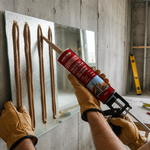
- Load the sealant cartridge into a caulking gun and cut the nozzle at a 45-degree angle for better control during application.
Proper preparation ensures stronger adhesion and a more professional-looking finish.
Frequently Asked Questions (FAQ)
How long does silicone sealant take to cure?
The outer surface typically becomes touch-dry within 15–30 minutes.
However, complete curing throughout the sealant requires at least 24 hours, depending on the product, joint depth, humidity, and temperature.
Can silicone sealant be painted after it cures?
No. Unlike acrylic sealants, pure silicone naturally resists paint adhesion.
For the best appearance, choose a sealant color that matches your window frame before installation.
Why does my window sealant turn black or develop mold?
Black stains and mold usually occur because of constant moisture exposure, poor ventilation, or the use of interior-grade silicone in exterior applications.
For outdoor windows, always choose a weatherproof silicone sealant specifically formulated to resist UV exposure, moisture, and mold growth.
Protect Your Windows with the Right Silicone Sealant
Selecting the correct silicone sealant and applying it properly can keep your windows watertight, weather-resistant, and visually attractive for many years.
Whether you're sealing residential windows, commercial glazing systems, or renovation projects, using the appropriate silicone formulation is essential for long-term durability and reliable leak protection.
Contact Batara Group to discuss your project requirements and receive expert recommendations on the best glass silicone sealant and waterproof sealing solutions for your application.