 Bahasa
5 Most Effective Roof Heat Insulation Materials for Tropical Homes
Living in a tropical climate means dealing with intense sunlight and high temperatures throughout much of the year. Without proper protection, indoor temperatures in homes or industrial buildings can become uncomfortably hot.
As a result, air-conditioning systems may need to work harder to maintain a comfortable indoor temperature, potentially increasing energy consumption and electricity costs.
To help reduce unnecessary energy use, an effective roof heat insulation system can play an important role. Let’s explore five common approaches and materials that can help reduce heat transfer through the roof.
Why Does the Roof Become a Major Source of Heat?
Architecturally, the roof is one of the building components most directly exposed to solar radiation throughout the day.
Roofing materials that absorb solar heat—such as metal sheets, concrete, or conventional clay tiles—can transfer heat to the roof cavity and ceiling area below. When hot air becomes trapped in this space without adequate ventilation or insulation, indoor temperatures can rise.
Without insulation or an effective ventilation pathway, accumulated thermal energy can eventually contribute to higher temperatures in living spaces or work areas.
5 Roof Heat Insulation Options
Not every building requires the same solution. The following are five common approaches for managing roof heat in the Indonesian market:
1. Aluminum Foil Insulation
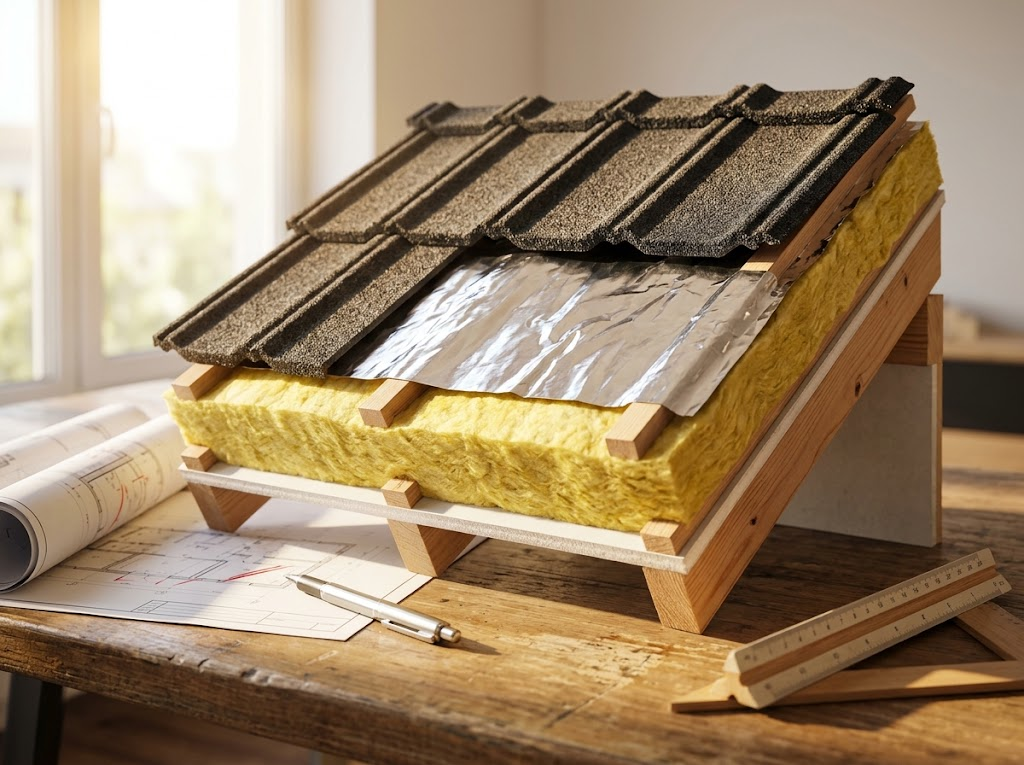
Aluminum foil insulation works as a reflective barrier. Rather than primarily absorbing solar radiation, its reflective surface can reflect a significant portion of radiant heat away from the building when installed correctly.
For example, Polyshield can reflect up to 97% of radiant heat, based on its product specifications, helping reduce the amount of radiant heat entering the building.
This insulation system is thin, lightweight, and commonly installed beneath roof battens or within the roof assembly, depending on the roof construction and installation method.
2. Roof Turbine Ventilator
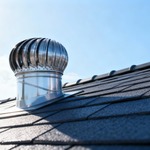
While reflective foil helps manage radiant heat, a roof turbine ventilator helps remove hot air accumulated in the roof cavity through natural ventilation.
Outdoor wind and thermal buoyancy cause the turbine blades to rotate, helping draw hot air from the space beneath the roof and release it outside the building.
3. Stone-Coated Metal Roofing
Stone-coated metal roofing can provide a combination of roofing performance and thermal management.
Its stone-chip coating can help reduce the impact of direct solar exposure on the underlying steel panel. In addition, the textured surface can help reduce rain noise compared with some conventional metal roofing systems, depending on the roof assembly.
4. Rockwool or Glasswool
Rockwool and glasswool are porous mineral-fiber insulation materials that can be installed in the ceiling or roof assembly. They are often combined with a facing layer, such as aluminum foil, depending on the insulation system.
These materials are particularly useful for reducing conductive heat transfer and can also contribute to acoustic insulation, making them suitable for spaces where both thermal and sound performance are important.
5. Hybrid Systems
There is no requirement to rely on a single system. Combining two or more approaches can address different heat-transfer mechanisms.
For example, combining a reflective material such as aluminum foil with roof ventilation can help manage radiant heat while also improving the removal of hot air from the roof cavity.
Comparison of Effectiveness and Cost
The following table provides a general comparison to help with preliminary budgeting and specification:
| Material / System | Primary Function | Cost Range | Suitable Applications |
|---|---|---|---|
| Aluminum Foil | High performance for managing radiant heat | Economical | Various residential roof systems |
| Roof Turbine Ventilator | Hot-air removal and ventilation | Mid-range | Warehouses, factories, large halls |
| Stone-Coated Metal Roofing | Roofing protection and solar heat management | Premium | Residential buildings with lightweight steel framing |
| Rockwool / Glasswool | Reduces conductive heat transfer and sound transmission | Premium | Studios, partitions, ceiling and roof assemblies |
| Hybrid System | Addresses multiple heat-transfer mechanisms | Higher | Large-scale industrial and commercial buildings |
Note: Actual performance and cost depend on product specifications, roof construction, installation quality, building orientation, ventilation design, climate, and site conditions. The options above should not be considered interchangeable on a one-to-one performance basis.
Recommended Combinations
To make your material investment more effective, select the system based on the building type, roof construction, climate, and expected thermal load.
For Residential Buildings
For tropical homes, one approach that can be considered is combining stone-coated metal roofing with double-sided aluminum foil insulation.
The roofing system helps protect the building from direct weather exposure, while the reflective insulation layer can help manage radiant heat entering the roof assembly.
For Warehouses and Factories
Industrial buildings can experience higher thermal loads, particularly when heat-generating machinery or processes are present.
One approach is to install reflective foil beneath a galvalume roof, supported by roof turbine ventilators positioned along the roof ridge or other suitable locations. Proper ventilation design is important to ensure that the system can effectively remove accumulated hot air.
Find the Right Roofing Materials for Your Project
Thermal performance should be considered from the early stages of building design and construction. Batara Group provides a range of building materials, including Insulation, Roof Turbine Ventilators, and industry-standard Roofing Tiles.
To further understand thermal management for residential and commercial buildings, explore our guide on Why Does Your House Feel Hot During the Dry Season? Understanding the Role of Roof Insulation.
For industrial facility managers, read our in-depth guide on Roof Turbine Ventilators: A Solution for Hot Warehouse Temperatures, as well as our guide to Stone-Coated Metal Roofing for Heat, Rain, and Noise Protection.
Contact the Batara Group team to discuss your roof area, thermal insulation requirements, and project specifications and get a quotation tailored to your needs.