 Bahasa
Building Areas That Need Waterproofing the Most
Building Areas That Need Waterproofing the Most
Not every area of a building faces the same level of water exposure. Some parts of a building are naturally more vulnerable to water infiltration and moisture damage than others, making them a higher priority when planning and installing a waterproofing system.
Concrete Roof Slabs and Flat Roofs
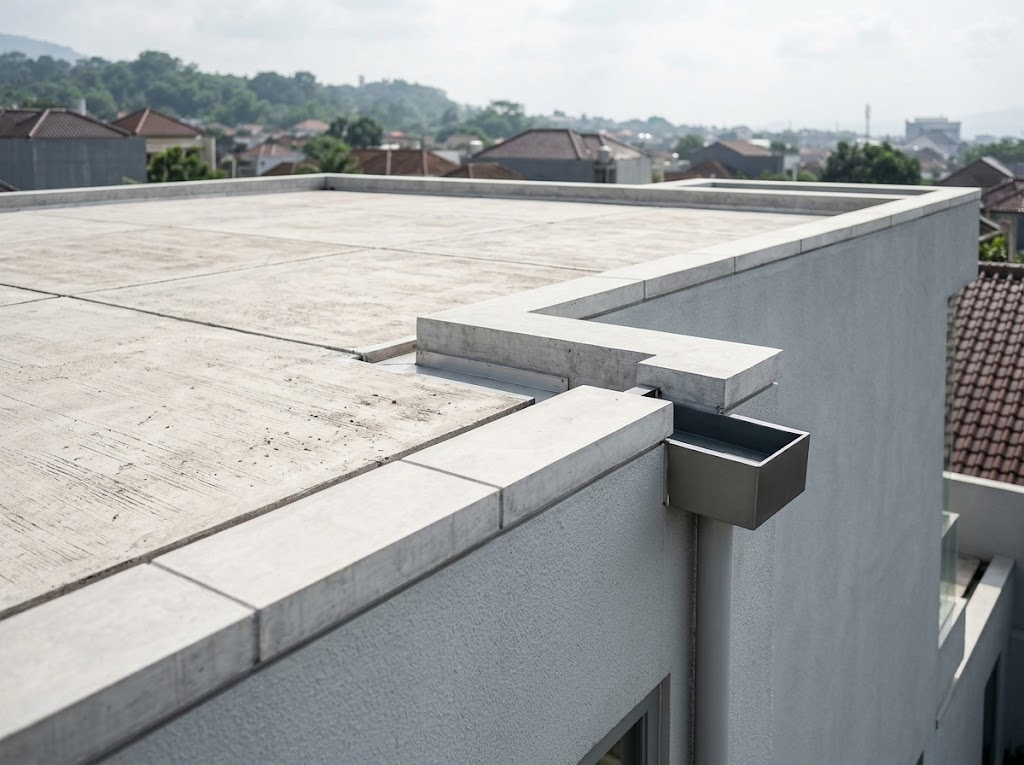
Concrete roof slabs are among the building areas most directly exposed to rain, sunlight, and temperature fluctuations throughout the year, as explained in the article Building Waterproofing: Functions, Types, and How to Choose the Right Solution.
Continuous exposure to changing weather conditions makes concrete roof slabs one of the key areas that require effective waterproofing protection. Without proper protection, water can penetrate through cracks, joints, or deteriorated surfaces and eventually cause leaks inside the building.
Basements and Underground Areas
Basements face a different type of water-related risk due to groundwater pressure surrounding the structure. Unlike rainwater that primarily falls onto exposed surfaces, groundwater can exert continuous pressure from multiple directions.
For this reason, a basement waterproofing system should be selected based on factors such as the surrounding soil conditions, groundwater level, and the building's structural design.
Bathrooms, Toilets, and Other Wet Areas
Areas with frequent water exposure, such as bathrooms, toilets, kitchens, and other wet areas, require adequate waterproofing to prevent water from penetrating into adjacent spaces or floors below.
Long-term moisture accumulation can also increase the risk of mold growth on walls and floors. Proper waterproofing in wet areas can therefore help protect both the building structure and indoor environment from moisture-related problems.
Swimming Pools and Surrounding Areas
Swimming pools contain a large volume of water that remains in direct contact with concrete structures for extended periods. This creates a constant water pressure that the waterproofing system must be able to withstand.
A swimming pool waterproofing system should therefore provide reliable protection across both the pool walls and floor, including critical joints and connection areas where water penetration may occur.
Rooftop Gardens on Concrete Roof Slabs
Rooftop gardens present additional waterproofing challenges because plant roots can potentially penetrate or damage conventional protective layers if the waterproofing system is not specifically designed to resist root penetration.
As discussed in the article Waterproofing for Rooftop Gardens: Is Standard Concrete Roof Slab Waterproofing Enough?, specialized materials may be required for rooftop garden applications.
Products such as Casali Membrane Eradix are specifically designed with root-resistant properties for applications such as rooftop gardens. This differs from materials commonly used for standard concrete roof slabs, such as Casali Membrane Viscogum.
How to Prioritize Waterproofing Applications
Since each building area has different water exposure and risk levels, waterproofing should ideally be planned from the early stages of construction. The function of each area, expected water exposure, structural conditions, and environmental factors should all be considered when selecting the appropriate waterproofing system.
By identifying high-risk areas and choosing waterproofing materials according to their specific applications, building owners and construction professionals can establish more effective protection against water infiltration, leaks, and long-term moisture damage.